

Subscribe from $5.99
0,00 USD

No products in the cart.

6 Fun and Creative Coding Apps for Kids

Advertisement

Originally published in TEACH Magazine, November/December 2016 Issue

Programming is a useful skill for all kids to learn. Not only will it allow them to become creators of technology, but can also aid in the development of other critical thinking and problem-solving skills. Here are some apps that should get kids excited about coding from a young age.

Cargo-Bot
(Free – iOS)

Cargo-Bot is an iPad app suitable for elementary students ages 10+. The objective of the game is to move coloured crates from one place to another by programming a claw crane to pick up, drop, and move left or right. Scores depend on how concisely the code is designed and how efficiently the crane works. Students can even record their solutions and share them on YouTube.

Codeacademy
(Free – Website)

Codeacademy uses interactive exercises that are organized into lessons to teach users how to code in several programming languages, including JavaScript and Python. Codeacademy is more challenging as it asks users to type syntax and coding sequences and is recommended for students ages 13+.

Hopscotch
(Free – iOS, Website)

Hopscotch allows kids to code by simply dragging blocks that contain specific actions. The fun and creative format gives students a blank canvas to “code” anything from mini-games, to creative drawings, and even Minecraft remakes. Hopscotch also offers help videos, community forum, and curriculum.
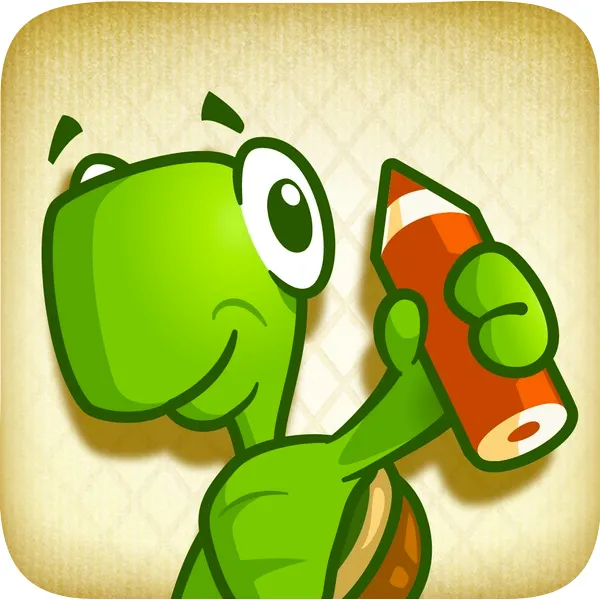
Move the Turtle
(Paid – iOS)

Like the name suggests, this app teaches coding to kids ages 5+ by moving a turtle around. As the turtle moves, it creates geometrical patterns and shapes. Kids will learn the basics of programming in a colourful, graphic environment. They will learn how to plan complex activities, how to reuse previous work, and how to use graphics, spatial orientation, and sound in programming. Each new level increases in difficulty and teaches a new command that directs the turtle to reach its destination.
The Rocket Cupcake Co.
(Paid – iOS)

The Rocket Cupcake Co. introduces kids ages 7+ to coding through a story-based adventure. Kids learn coding fundamentals with characters Goldie and Ruby as they deliver cupcakes all around BloxTown. Users code the path for the characters to pick up the ingredients and then deliver the finished cupcakes. The puzzles and games teach sequencing, mental modeling, and debugging. The app is developed by GoldieBlox, a multimedia company that seeks to empower girls to enter the STEM industry.

Tynker
(Free Options – iOS, Website)

Tynker is a complete learning system that teaches kids ages 7+ to code. They begin with visual blocks, then progress to text-based coding as they design games and build apps. Students can choose to explore learning coding basics, that includes game-based courses. They can then move on to modding Minecraft, commanding drones, developing games, and learning JavaScript and Python through the app. The app also features lesson plans, classroom management tools, and an online showcase of student-created programs.

TEACH is the largest national education publication in Canada. We support good teachers and teaching and believe in innovation in education.

Education News

Social Media, Identity, and Power in the Digital Age: Youth-Led Conference on March 22

This free virtual event for Grades 8–12 will explore how social media influences identity, power, culture, entrepreneurship, and digital well-being.

A Slice of Learning: Mathnasium and Pizza Pizza Celebrate Pi Day

National Pi Day partnership brings hands-on math experiences and a chance to win a $3,140 scholarship and $314 Pizza Pizza gift card.

How to Boost Participation in Physical Activity for Autistic Youth

Researchers investigating how to increase participation in physical activity by autistic children say key strategies include creating predictable routines, involving family members, and ensuring safe and sensory-friendly spaces.

Registration Now Open for Free Global Math Competition on March 24

World Maths Day, the world’s largest online mathematics competition, kicks off on March 24. Over the years, this fun, free international celebration of math has seen over 10 million students answer more than 1 billion questions.

Natural History Institute and Prescott College Partner to Offer Naturalist Certification Program

The unique Mogollon Highlands Naturalist Certification program is designed to cultivate deep connections to nature, place, and community through the practice of natural history.

The Data Is Clear: Students Want Job Outcomes and U.K. Universities Are Listening

Is going to university still worth it? That’s a question I hear more and more often these days. The answer increasingly depends on what a student wants from that degree.
TEACH Mag
TEACH Mag
TEACH is the largest national education publication in Canada. We support good teachers and teaching and believe in innovation in education.

Advertisement

Read More

Social Media, Identity, and Power in the Digital Age: Youth-Led Conference on March 22

This free virtual event for Grades 8–12 will explore how social media influences identity, power, culture, entrepreneurship, and digital well-being.

Absenteeism Is Predictable. We Must Learn to Read the Patterns.

Absenteeism is predictable. The signs are there. You just need to know how to read them.

Why You Should Use Poetry with Older Students

Poetry is not some niche subject to be avoided with older English-language learners. On the contrary, it’s a versatile and powerful tool.

Professional Learning in 2026: Balancing Innovation, Coherence, and Teacher Voice

The traditional model of mandated, one‑size‑fits‑all workshops is giving way to professional learning that is more responsive, curriculum-aligned, and customized to each educator’s experience and goals.

A Slice of Learning: Mathnasium and Pizza Pizza Celebrate Pi Day

National Pi Day partnership brings hands-on math experiences and a chance to win a $3,140 scholarship and $314 Pizza Pizza gift card.

How to Boost Participation in Physical Activity for Autistic Youth

Researchers investigating how to increase participation in physical activity by autistic children say key strategies include creating predictable routines, involving family members, and ensuring safe and sensory-friendly spaces.