

Subscribe from $5.99
0,00 USD

No products in the cart.

Celebrating Indigenous History Month with Indigo

Advertisement

By Madison Downey

This June, the Indigo Love of Reading Foundation (ILOR) honoured National Indigenous History Month in a historic way. The foundation donated its largest sum to date to First Nations schools. They impacted 30+ schools by awarding $300,000 of a total $1,000,000 to 11 on-reserve schools. These funds will help dramatically increase library budgets, ensuring new books and resources are available to 10,000 students and creating access to current literature in schools. 

Libraries Are Crucial

The Indigo Love of Reading Foundation has always recognized the disproportionate need in rural and remote communities. But this year, the foundation refined its application process with the goal of increasing inclusivity and making funding more accessible. As a result, this year’s cohort is more diverse and broad-spanning than ever before.

“Libraries play an important role in student engagement,” says Shelby Ch’ng, Education Partnership Liaison of the Matawa First Nations Education Department. “Northern and remote school boards are underfunded and short on space. Principals and school boards often have to make tough decisions between buying light bulbs for their gym or purchasing new books for their schools. School staff do their best, but with grants like the Indigo Love of Reading Grant, it will not only take the decision burden off the staff, but also go quite far with engaging students in a meaningful way.”
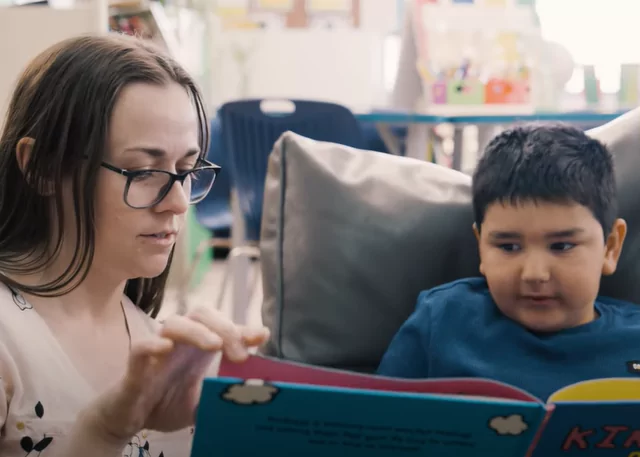
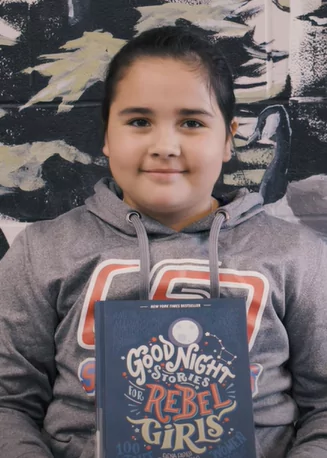
Teacher reading to a young Indigenous child holding a book with the title: "Good Night Stories for Rebel Girls."
Photo courtesy of the Indigo Love of Reading Foundation

Diversity in Books

Indigo works to ensure that Indigenous authors and stories are represented on its bookshelves. Doing so will safeguard support that both teachers and parents need to select diverse books for the young people in their lives. With this year’s grants, the foundation aims to help schools who have limited resources to do the same on their own shelves.

Off-reserve grant recipients are encouraged to use their funds to expand their libraries and include current texts by Indigenous authors that honour their cultures and histories.
A young Indigenous child
Photo courtesy of the Indigo Love of Reading Foundation

“Accessing culturally relevant and diverse texts is top of mind for this year’s educators,” says Rose Lipton, Executive Director of ILOR. “The Indigo Love of Reading Foundation is proud to partner with this incredible group of schools and educational organizations to help them realize their literacy goals and get more kids excited about reading.” 

To date, the Indigo Love of Reading Foundation has reached over one million students, donating over $35 million in funding to schools from coast to coast. It includes those in economically disadvantaged communities with limited library budgets.

A full list of this year’s recipients can be found here.

Madison Downey is Indigo’s Communications Manager and a passionate reader. She also leads communications for Indigo’s Sustainability and Diversity and Inclusion initiatives.

Education News

ReadBright Literacy Tools Earn Bronze Efficacy Certification from EduEvidence

This independent certification recognizes that ReadBright aligns with the Science of Reading and meets rigorous standards for evidence-based instructional design.

Teaching Children to Be Better, More Critical Internet Users

McGill researchers designed and then tested a program that was shown to improve elementary students’ digital literacy skills.

Common Sense Media Launches Youth AI Safety Institute

The first-of-its-kind AI safety lab focused on children will independently test AI products, broadly publish the results, and set clear standards to protect the safety, health, and development of a generation growing up with AI.

Providing Easy Access to Curriculum-Aligned Indigenous Resources

Ontario’s Niagara Catholic District School Board and Nelson partnered together to support educators who are teaching subjects with Indigenous content.

Controlled Chaos: Lessons in Laughter, Growth, and the Magic of Teaching

“Controlled Chaos” is a collection of stories that will have you in stitches, feeling inspired, and questioning the very idea of what “normal” looks like in education.

Updated Guidance on Responsible Use of Technology in Schools 

The third edition of “Setting Conditions for Success” reflects evolving expectations around AI, student well‑being, and digital citizenship.
Madison Downey
Madison Downey
Madison Downey is Indigo’s Communications Manager and a passionate reader. She also leads communications for Indigo’s Sustainability and Diversity and Inclusion initiatives.

Advertisement

Advertisement

Read More

Supporting Teachers New to Inquiry-Based Learning

The shift to inquiry-based learning can present significant challenges. How can teachers best be supported through that transition?

In Times of Extreme Political Polarization, Here’s How Teachers Can Support the Most Vulnerable Students

Over the past year, our most vulnerable students across the U.S. have been under attack. While the current administration systematically dismantles the Department of Education, these students still show up at school every day.

ReadBright Literacy Tools Earn Bronze Efficacy Certification from EduEvidence

This independent certification recognizes that ReadBright aligns with the Science of Reading and meets rigorous standards for evidence-based instructional design.

Mental Health and Student Attendance: The Intervention Hiding in Plain Sight

A punitive response to a late or absent student, the recorded tardy, the “you’re late again,” doesn’t just fail to help. It adds to the weight a struggling student is already carrying.

Murdoch is Cracking the Case on Student Engagement

Murdoch in the Classroom offers a fresh, distinctly Canadian way to bring story-led, curriculum-connected learning into the classroom.

How Slam Poetry Transforms the FSL Classroom

My FSL classroom is rarely quiet. There’s laughter, music, performance, and sometimes a bit of chaos, but it’s the productive kind. On poetry unit days, students sit congregated in groups, and they transform the space into a “scène de slam.”