

Subscribe from $5.99
0,00 USD

No products in the cart.

Celebrating Indigenous History Month with Indigo

Advertisement

By Madison Downey

This June, the Indigo Love of Reading Foundation (ILOR) honoured National Indigenous History Month in a historic way. The foundation donated its largest sum to date to First Nations schools. They impacted 30+ schools by awarding $300,000 of a total $1,000,000 to 11 on-reserve schools. These funds will help dramatically increase library budgets, ensuring new books and resources are available to 10,000 students and creating access to current literature in schools. 

Libraries Are Crucial

The Indigo Love of Reading Foundation has always recognized the disproportionate need in rural and remote communities. But this year, the foundation refined its application process with the goal of increasing inclusivity and making funding more accessible. As a result, this year’s cohort is more diverse and broad-spanning than ever before.

“Libraries play an important role in student engagement,” says Shelby Ch’ng, Education Partnership Liaison of the Matawa First Nations Education Department. “Northern and remote school boards are underfunded and short on space. Principals and school boards often have to make tough decisions between buying light bulbs for their gym or purchasing new books for their schools. School staff do their best, but with grants like the Indigo Love of Reading Grant, it will not only take the decision burden off the staff, but also go quite far with engaging students in a meaningful way.”
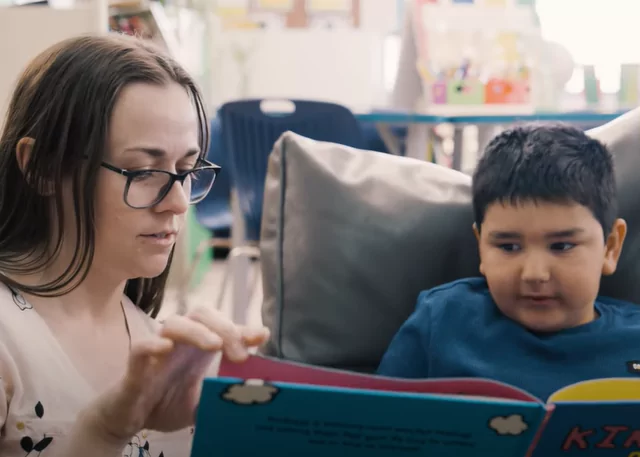
Teacher reading to a young Indigenous child holding a book with the title: "Good Night Stories for Rebel Girls."
Photo courtesy of the Indigo Love of Reading Foundation

Diversity in Books

Indigo works to ensure that Indigenous authors and stories are represented on its bookshelves. Doing so will safeguard support that both teachers and parents need to select diverse books for the young people in their lives. With this year’s grants, the foundation aims to help schools who have limited resources to do the same on their own shelves.

Off-reserve grant recipients are encouraged to use their funds to expand their libraries and include current texts by Indigenous authors that honour their cultures and histories.
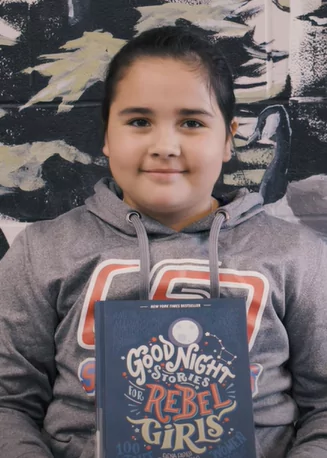
A young Indigenous child
Photo courtesy of the Indigo Love of Reading Foundation

“Accessing culturally relevant and diverse texts is top of mind for this year’s educators,” says Rose Lipton, Executive Director of ILOR. “The Indigo Love of Reading Foundation is proud to partner with this incredible group of schools and educational organizations to help them realize their literacy goals and get more kids excited about reading.” 

To date, the Indigo Love of Reading Foundation has reached over one million students, donating over $35 million in funding to schools from coast to coast. It includes those in economically disadvantaged communities with limited library budgets.

A full list of this year’s recipients can be found here.

Madison Downey is Indigo’s Communications Manager and a passionate reader. She also leads communications for Indigo’s Sustainability and Diversity and Inclusion initiatives.

Education News

Using Music to Teach Democracy

Targeted at students aged 6–14, project MELODY is building a cross-curricular methodology that integrates music with citizenship education.

Free eBook Offers Roadmap to Human-Centered Communication in the Age of AI

The free resource offers districts a roadmap for building strong family engagement during a period of rapid automation in schools.

Behind Canada’s Declining Math Performance and the Evidence-Based Fix

For over a decade, math scores on international tests have declined across all Canadian provinces. Here’s what schools can do to reverse this downward trend.

New YA Novel Shows How Fiction Conquers Real Fears in the Age of “Run, Hide, Fight”

“Gone Before You Knew Me” is a satirical spy thriller about a girl trying to make it out of high school alive. The story is fictional, but it speaks to real fears in an age where students and staff are drilled in “run, hide, fight” scenarios as a matter of course.

Why Table Tennis Is Working in NYC Classrooms

As the newly released film “Marty Supreme” brings the world of table tennis into the cultural spotlight, it also quietly parallels a powerful real-life story behind the sport.

Celebrate Love and Kindness with Julie Flett’s Latest Picture Book

From beloved author and illustrator Julie Flett comes an adorable celebration of the ways we show love. For kids up to age 7.
Madison Downey
Madison Downey
Madison Downey is Indigo’s Communications Manager and a passionate reader. She also leads communications for Indigo’s Sustainability and Diversity and Inclusion initiatives.

Advertisement

Read More

Using Music to Teach Democracy

Targeted at students aged 6–14, project MELODY is building a cross-curricular methodology that integrates music with citizenship education.

An Interdependent Approach: Building and Centring Positive Disability Identities in the Classroom

As educators, we aim to create meaningful, exciting, and supportive futures for all of our students. That’s why we must build learning environments where positive disability identities grow.

Here’s How Captain Sandy Is Raising Awareness of Careers in the Marine Industry

Reality TV star and superyacht captain Sandy Yawn speaks with us about how her educational program is creating opportunities for young people to thrive in the maritime industry.

Free eBook Offers Roadmap to Human-Centered Communication in the Age of AI

The free resource offers districts a roadmap for building strong family engagement during a period of rapid automation in schools.

Behind Canada’s Declining Math Performance and the Evidence-Based Fix

For over a decade, math scores on international tests have declined across all Canadian provinces. Here’s what schools can do to reverse this downward trend.

Beyond the Map: Engaging with Complex Histories to Support Critical Place-Based Learning

As educators, we are rarely asked to sit with the histories of our city and consider how they influence our pedagogy, curriculum, and relationship with the community.