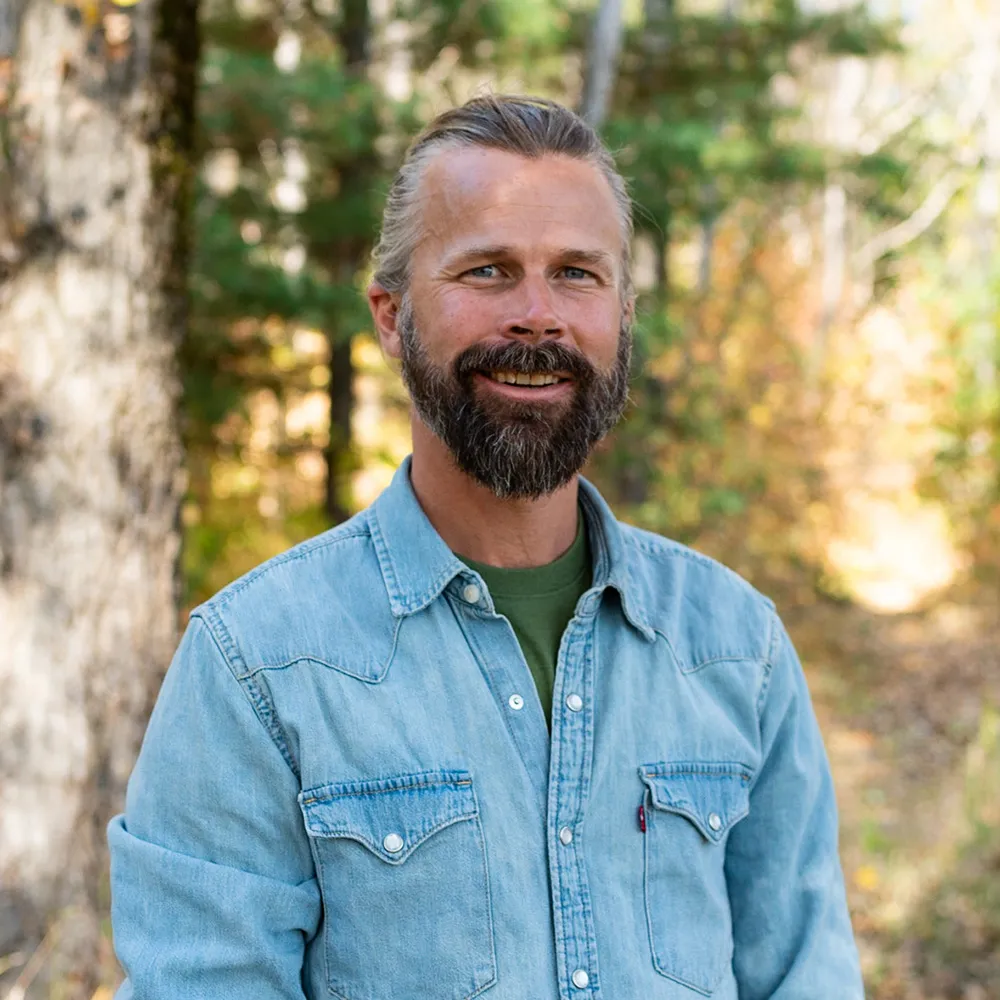
By Jeff Barrett
What would school look like if we designed it around what we now know about adolescent brain development? WILDE School began with that question.
Before the timetable, before the curriculum, before the language, we asked what kind of environment a young person actually needs to grow well. What are the conditions for human flourishing?
That question changes how you see everything else. It changes how you look at curriculum and how you look at behaviour. It changes how you look at the student who will not sit still, the one who never speaks, the one who is brilliant but disorganized, who seems angry all the time, who has quietly decided school is not for them.
It also changes the job of the teacher.
Much of today’s K–12 education system still runs on old industrial habits. Bells. Blocks. Subjects divided into containers. Students moving through the day as if learning happens because adults scheduled it carefully enough. There is comfort in that structure. There is also a limit to it.
Brains grow through experience. They are shaped by relationship, attention, movement, emotion, stress, recovery, belonging, challenge, sleep, food, friendship, and purpose—and by the simple feeling that what you’re doing means something.
This is where Permacognitive Education, or Perm. Ed., begins.
We often use the image of a garden. A garden needs light, nutrients, space, water, protection, pruning, patience, and care. It also needs the gardener to pay attention. You can’t force a cedar tree, a tomato plant, and a wildflower to grow in identical ways just because it’s easier to manage one kind of growth.
Children are the same.
For teachers, Perm. Ed. starts with noticing. What does this child love? Where do they light up? When do they settle, and when do they get defensive? Who helps them calm down? What work makes them proud? Where do they avoid challenge? What do they keep coming back to when nobody is telling them what to do?
That’s where great teaching begins.
When you know your students well, curriculum gets easier to build. You stop guessing. You stop dragging them toward work that feels dead before it starts. You start finding the living entry points.
A kid who loves animals can enter biology through habitat. A student who loves maps can enter writing through a trail proposal. A group that loves games can enter math, probability, storytelling, design, fairness, feedback, and revision by building a board game of their own.
The curriculum is still there. The expectations are still there. The route in is just different. It starts with the student in front of you.
At WILDE, we use a simple cycle: observe, design, implement, adapt.
Teachers observe the students. They design the conditions. Students try things in the real world. Everyone pays attention to what happens next.
That last part is crucial. Plans are useful. Students are more useful. If a lesson goes flat, that’s information. If the group gets restless, that’s information. If the student who usually disappears suddenly takes the lead, that’s information too.
The teacher adapts with that feedback. Maybe more structure, maybe less. Maybe more movement, maybe more quiet. Maybe smaller groups. Maybe just a better question.
This kind of school is often more demanding than the standard version, because real work asks more of students. It’s also more engaging and more alive, because it’s built from real-time information: what students notice, what they lean into, where they get stuck, and what the teacher learns about them along the way.
That kind of teaching gives the student more to care about and gives the teacher more energy back. Ultimately, it means less time managing the class and more time actually teaching.
When WILDE students build a turtle pond, they learn about habitat, water systems, biology, responsibility, patience, and care. They also learn the work isn’t over when the building is done. Living things depend on them now.
When students speak to council about protecting a local trail, they research, map, write, revise, rehearse, and stand up in a public room to speak for a place they love. That kind of writing carries weight. It carries relevance too.
When students design a board game, they argue over rules, test systems, calculate odds, write instructions, make art, take feedback, and rebuild the parts that don’t work.
This is where academics start to matter more. Science, math, writing, art, social studies: none of these float above the child’s life anymore. They’re attached to real places, real problems, real relationships, real responsibility. Students aren’t being asked to care about these subjects from a distance. They become part of their lives, and because of that, students are more invested.
Done well, this kind of learning becomes internally motivated. The student builds their own momentum. The teacher’s job shifts to guiding the trajectory instead of pushing the rock uphill.
There’s relief in that for teachers, too. You don’t have to manufacture engagement out of thin air. You don’t have to perform enthusiasm for work nobody in the room actually cares about. You start by knowing your students. You build from what’s already alive. Then you watch closely enough to adjust.
You also watch closely enough to see what’s actually being learned. The teacher notices the skills, concepts, and curriculum expectations showing up in the work, then names and documents them for assessment. Assessment stops being about pausing the learning to measure it. It becomes about paying close attention while it happens.
In this model, the teacher is a designer, not an administrator of information. That’s a more exciting role. It’s also a far more powerful one.
That’s the heart of Perm. Ed.
Call it less a pedagogy and more a shift in perspective. A school is an ecology. The nervous system matters. The body matters. The peer group matters. The bond between teacher and student matters. The land and the work matter. So do recovery and challenge.
Take care of those conditions and something sturdier than short-term happiness starts to grow: belonging, competence, contribution, friendship, responsibility, and a sense that your life actually touches the world.
That’s what we’re building at WILDE.
A school designed for living systems.
Jeff Barrett is the Executive Director of Grow WILDE and the founder of WILDE School, where he is leading the development of Permacognitive Education—a nature-based, human-centred approach that reimagines learning for the 21st century. Drawing on a background in education, landscape architecture, expedition leadership, and child development, his work focuses on designing learning environments that help young people thrive academically and personally.