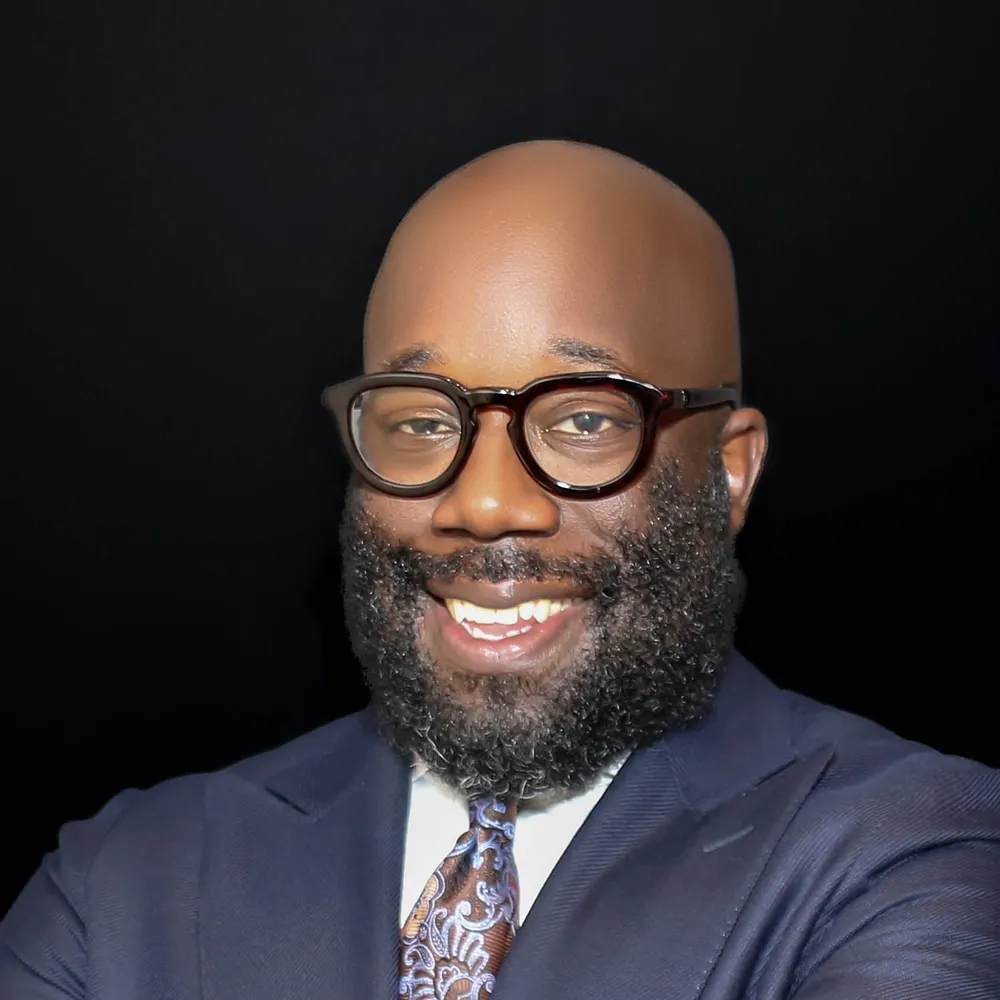
By Charles A. Barrett
When I arrived at Lehigh University’s College of Education as a graduate student in August 2002, I believed every child deserved a champion. What I learned there shaped my career.
I discovered that helping children isn’t just about working with one student at a time. It’s about creating effective systems and using data to not only intervene when students are experiencing difficulty, but also to prevent these challenges as much as possible.
Over my close to 20-year career, the lessons I learned from Iaccocca Hall on the Mountaintop Campus have stayed with me in every role I’ve held since.
Today, as a district-level administrator, graduate educator, and someone who proudly identifies as a school psychologist at heart, I recognize a hard truth we can’t ignore: Virginia lacks enough school psychologists, and this shortage is hurting children.
This isn’t an abstract issue with the workforce. It’s what happens when real children are in distress and there aren’t enough school psychologists to provide the much-needed small-group or individual counselling. It’s what happens when real teachers and families need to learn skills to help their students and children, but school psychologists don’t have enough time to consult with them because they are drowning in completing federally mandated evaluations and writing reports.
It’s what happens when the needs are so great, but practitioners are already stretched so thin that the children, families, and schools they are charged to serve don’t benefit from the expertise they’ve worked hard to cultivate.
Representing approximately 25,000 school psychologists and graduate students, the National Association of School Psychologists (NASP) recommends one school psychologist for every 500 students. While the exact school psychologist-to-student ratio varies, for many years and in many school divisions, we are far from meeting this standard.
Consider this: when one school psychologist is responsible for upwards of 1,500 students, it is easy for the prevention and intervention activities that I learned at the College of Education to feel like luxuries or options, rather than what every student deserves as part of a free and appropriate public education.
Having served at both the elementary and secondary levels, I can attest that school psychologists do more than most people realize. While evaluating students for special education eligibility is often at the top of anyone’s list when thinking about our role and function, at our core, we are problem solvers. We are collaborators.
We work closely with fellow educators and families to help them understand their students and children. We recommend evidence-based approaches to facilitate learning and development. We work directly with children, implementing interventions to support their academic skills, mental health, and well-being.
Simply stated, school psychologists work to make schools better for children. Although behavioural crises are inevitable, and we do our best to support students who experience them, we aim to create safe and supportive classrooms and schools to prevent them from happening in the first place.
Coupled with the shortage crisis, school psychology in Virginia, like the rest of the country, is also facing a problem with representation.
Despite our increasingly diverse student population, the profession still does not reflect the communities that many of us serve. Why is this important? What does this mean for students and families?
Since representation matters and cultural understanding is deeply connected to building trust, when families encounter school psychologists who look like them, they might be more comfortable and willing to engage with schools as true partners in their child’s education. And for children, seeing is believing, including opening the possibilities of what their own futures could entail.
Many students, especially those from racially and ethnically minoritized (REM) backgrounds, have never met a school psychologist who looks like them and makes them think, “I could do that.” And this is where the pipeline problem begins. Long before students are contemplating their undergraduate or graduate education, the field has lost many potential school psychologists because they simply don’t know that such an amazing profession exists.
Addressing critical workforce shortages and increasing representation in school psychology are why I have been championing the NASP Exposure Project (NASP-EP) since 2018. Its purpose is simple: because many school psychologists (myself included) discovered the field by chance, why not expose students to it intentionally?
The NASP-EP introduces high school students and undergraduates, especially those from REM backgrounds, to school psychology as a career. To date, more than 53,000 students have been introduced to school psychology through the NASP-EP. Even more exciting, there are students who are either enrolled in school psychology graduate programs or already serving children as school psychologists, having learned about the field through this project.
Using evidence-based strategies in the school psychology recruitment literature, the NASP-EP has the potential to change the landscape of school psychology in Virginia and nationally. School divisions such as my own (Loudoun County Public Schools) and Fairfax County Public Schools have been lending their support to this initiative by encouraging their staff psychologists, interns, and practicum students to present to high school students using NASP-EP materials, coupled with exposure. But this alone is not enough.
Virginia also needs stronger pathways to school psychology graduate programs, better funding opportunities for graduate students, and targeted support for aspiring school psychologists from REM backgrounds. And after school psychologists enter the field, it’s essential that we retain them. Why? Because recruitment without retention is just a revolving door.
As a graduate educator who has taught, supervised, mentored, or otherwise engaged with students at all of Virginia’s school psychology programs—George Mason University, James Madison University, Radford University, the University of Virginia, and William and Mary—universities also play a vital role. And as a proud alumnus of Lehigh University’s College of Education, I know first-hand what strong preparation can achieve.
Programs like Lehigh’s do more than teach technical skills; they equip future school psychologists to think critically, understand children in context, collaborate across systems, and lead with intention. Such preparation is important because the needs in schools are only becoming more complex.
My Lehigh training taught me that school psychologists should act as change agents. Rather than simply admiring problems, we are supposed to help solve them.
Despite the myriad challenges facing public education, it is an exciting time to be a school psychologist. Having spent my entire career in Virginia, I welcome the opportunity to work with policymakers, school division leaders, and universities to prioritize the pivotal role that school psychologists play in fostering children’s academic success, as well as their social, emotional, and behavioural well-being.
The children are our future, and they are certainly worth this commitment and investment from us.
Let’s strengthen the pipeline to school psychology. Let’s make earning a graduate degree more accessible through better funding opportunities. Let’s do everything we can to support school psychologists after they enter the field. And when we do these things, Virginia will lead the nation as a model of the excellent outcomes that children experience when we have a sufficient number of well-trained school psychologists.
Because it’s always about the children, let’s make this happen.

Charles A. Barrett, PhD, NCSP, is a Virginia-based district administrator and school psychologist who practiced for 13 years at the elementary and secondary levels. He is an adjunct lecturer involved in training future school psychologists and a past School Psychologist of the Year. He has held multiple leadership roles with the National Association of School Psychologists and is a proud alumnus of Lehigh University College of Education. You can learn more about him at www.charlesbarrett.org.