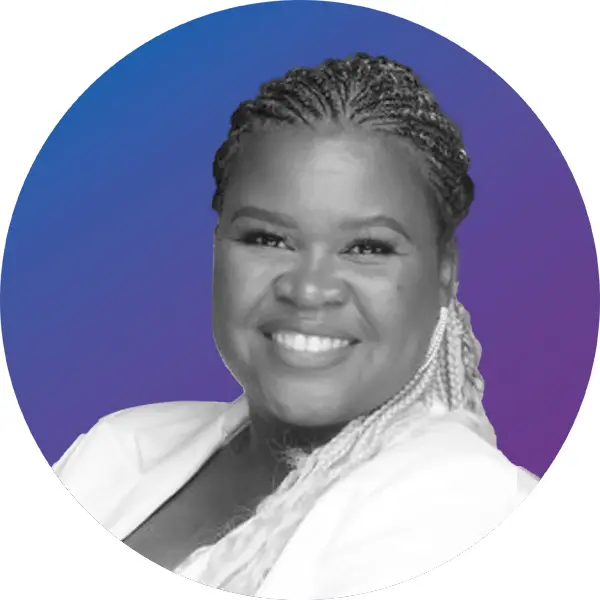
By Kheshana Woods
All educators know that literacy achievement does not happen by accident. It grows through intentional choices—decisions made every day about instruction, environment, and relationships.
By the time a student enters high school, it’s likely they will have spent more than 8,000 hours in the classroom. For many students, school becomes their “home away from home,” a space that cultivates skills, nurtures confidence, and fosters joy. And when students feel safe, valued, and connected there, they engage in learning in powerful ways.
I saw this first-hand during my nearly 20 years in education, and now, as the National Director of Literacy Advocacy at Curriculum Associates, I aid and empower educators in creating these supportive learning environments for their own students—particularly in literacy classrooms.
Building Connections
Research confirms that students who experience connection and belonging demonstrate stronger academic growth even years later. Belonging makes learning “sticky,” embedding knowledge more deeply because it’s tied to authentic human connection.
At Curriculum Associates, our framework offers a roadmap for making belonging actionable by focusing on the following:
- Validate students’ backgrounds and voices. Validation is the intentional and purposeful legitimization of students’ home cultures and languages.
- Affirm their value with texts and conversations that reflect their identities. Affirmation is the intentional and purposeful effort to reverse negative stereotypes, images, and representations of marginalized cultures and languages.
- Build on what students already know, turning cultural and linguistic assets into tools for learning. This can help foster rapport and relationships with students.
- Bridge their lived experiences to the academic skills they need to thrive in the classroom and beyond.
Literacy instruction is uniquely powerful in shaping belonging by providing reading experiences that allow students to see themselves reflected in stories. When a child encounters a character who looks like them, speaks like them, or wrestles with the same questions, they learn essential literacy skills and feel affirmed at the same time.
By prioritizing belonging in the literacy classroom, students feel comfortable taking more risks with reading, pushing through tough moments, and diving deep into texts with genuine curiosity. In this way, literacy instruction becomes a pathway to empowerment and enduring academic success.
What Belonging Looks Like in the Literacy Classroom
In practice, belonging can take the form of:
- A literacy corner designed to feel like home—with pillows, lights, and books that welcome every child.
- A teacher linking slang that students use on the playground to academic vocabulary, showing them the bridge between their world and the world of academia.
- A class studying the theme of “community” in social studies, literacy, and vocabulary, tying everything together through project-based learning. The key here is to prioritize core and supplemental curriculum programs that emphasize coherence.
Most importantly, belonging emerges from the joy students feel when they are confident enough to take risks, and the joy teachers share when they bring their whole selves to the work.
A Lesson from My Classroom
Early in my teaching career, I realized that many of my students spent more time in my classroom than in their own living rooms. That understanding changed everything. I became intentional about creating a space that felt warm and inviting: lamps instead of harsh overhead lights, rugs and pillows for reading, window dressings, and even gentle fragrances.
The transformation was immediate. Students settled more easily into learning. They reclined with books, kicked off their shoes, curled up in corners with pillows—and best of all, they began to read with confidence and curiosity.
The environment was only part of the story, of course. I also worked to ensure that every student had access to rich texts that reflected their lives and experiences. Seeing themselves in stories gave them the extra boost they needed to grow as readers.
Some might say these are small things. But as literacy advocate Kareem Weaver reminds us, “Hope is wonderful, but that’s not a strategy.” Creating belonging requires deliberate, specific choices about what we value, what we teach, and how we design the learning experience.

Kheshana Woods is a former veteran teacher and the national director for Curriculum Associates, specializing in literacy advocacy. She holds an MEd in Curriculum and Instruction and an EdS in Technology in Education. She served students for nearly 20 years in education: early intervention, general education, and academically and creatively gifted students.