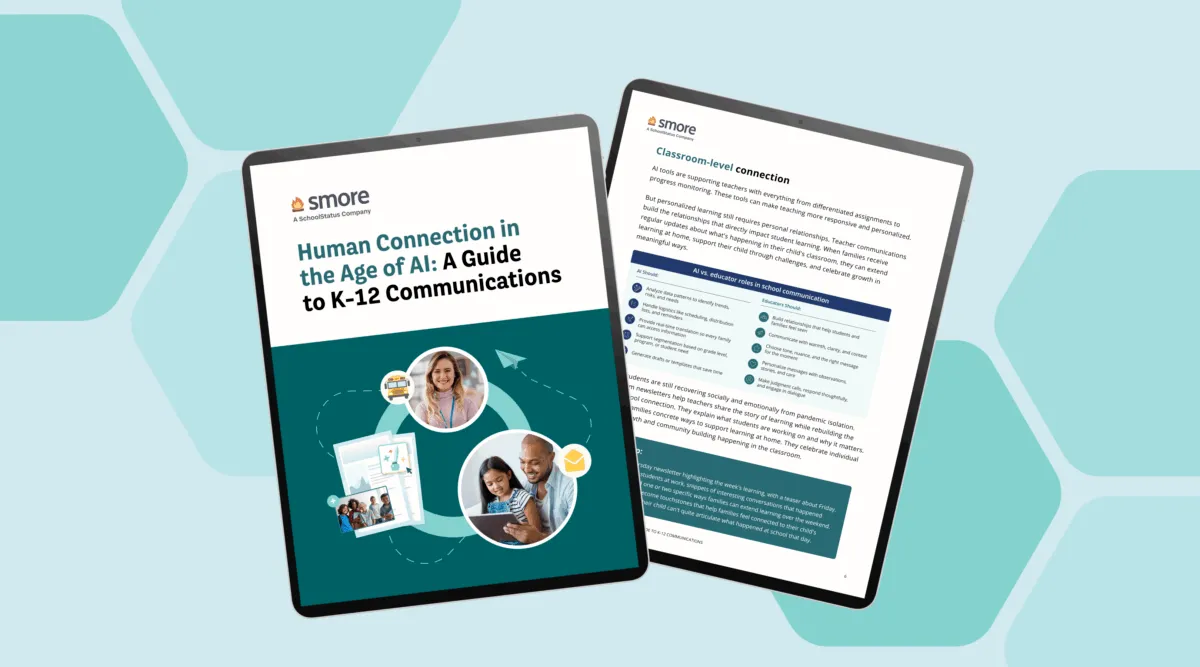
A new eBook from Smore and SchoolStatus offers guidance for K–12 leaders navigating the rapid expansion of artificial intelligence in schools. Human Connection in the Age of AI: A Guide to K–12 Communications explains how communication practices grounded in warmth, clarity, and authentic relationships help students and families feel connected at a time when AI is transforming nearly every operational aspect of education.
Districts are adopting AI tools for scheduling, attendance analysis, progress monitoring, workflow automation, and more. These advancements can improve efficiency for school systems working under tight staffing and resource constraints, but concerns over a loss of human interaction remain forefront for many. This report highlights a critical reminder for educators: teaching and learning happen through relationships. Communication is the connective tissue that holds those relationships in place.
“AI is changing the way schools function, yet the foundation of strong schools remains the human connection between educators, students, and families,” said Dr. Kara Stern, PhD, Director of Education at SchoolStatus and Smore. “Tools support logistics. People build trust. Schools that keep communication personal help students and families feel known and valued, and in order to do that, educators need more time. That’s where AI can be your superpower.”
Key Takeaways
The eBook provides a clear framework for building communication practices that strengthen community relationships across districts, schools, and classrooms.
1. How communication drives engagement
The guide highlights research showing that positive, personal communication helps families engage earlier in the school year and stay engaged longer. A case study from Roseville City School District in California shows that relationship-based outreach produced immediate attendance improvements for one-third of at-risk students.
2. What human-centered communication looks like
The report outlines three key elements that make communication feel personal: relevance, voice, and invitation. Families respond when messages feel tailored, when the writer’s personality comes through, and when communication encourages real dialogue rather than one-way updates.
3. How AI and educators work together
The eBook clarifies which roles should be automated and which require human judgment. AI can manage scheduling, distribution lists, engagement analytics, and translation. Educators provide warmth, context, and connection. This balanced approach saves time while improving communication quality.
4. How to maintain connections at scale
Many educators worry that personal communication becomes impossible once audience sizes grow. The guide offers solutions such as segmentation, templates, workflow automation, and consistent scheduling to help educators communicate with clarity and humanity across thousands of families.
Practical Tools for District and School Leaders
Human Connection in the Age of AI provides guidance and actionable strategies for implementing communication practices that build trust and community, including:
- Steps to support district, school, and classroom-level communication
- Examples for newsletters that bring families into daily school life
- Strategies for embedding dialogue into messages
- Tips for maintaining consistency during challenging moments
- Insights on using AI to support accessibility and translation without losing the human voice
“Families count on schools for clarity and consistency. They also want to hear from real people who care about their children,” said Dr. Stern. “This guide helps educators use technology in ways that lift the logistical load so they can invest more time and heart in communication that builds lasting connection.”
Human Connection in the Age of AI: A Guide to K–12 Communications is available for free. Download it here.
About Smore
Smore makes it fun and effortless to create engaging, accessible newsletters that keep families informed and involved in their children’s education journey. The team at Smore is passionate about empowering K–12 educators, schools, and districts to foster strong connections with families through vibrant, user-friendly newsletters, easy-to-use technology, and resources from education experts. Smore is a SchoolStatus product.

TEACH is the largest national education publication in Canada. We support good teachers and teaching and believe in innovation in education.