 Yearly Digital Subscription
  Monthly Digital Subscription
 This post is sponsored by Canadian Blood Services
In a worldwide first, Canada is set to become one of the first countries, alongside Northern Ireland, to introduce “Orgtober” to the school calendar in 2024—leading the way in organ donation education and early awareness.
Orgtober, formerly known as October, will be sweeping into primary school classrooms and calendars across the country. While the normal education curriculum will not be affected, this supplementary campaign seeks to breathe new life into organ donation education by starting earlier, getting more families talking, celebrating the fundamental values that underpin organ donation (kindness, compassion, and inclusivity), and having loads of fun while doing all of this!
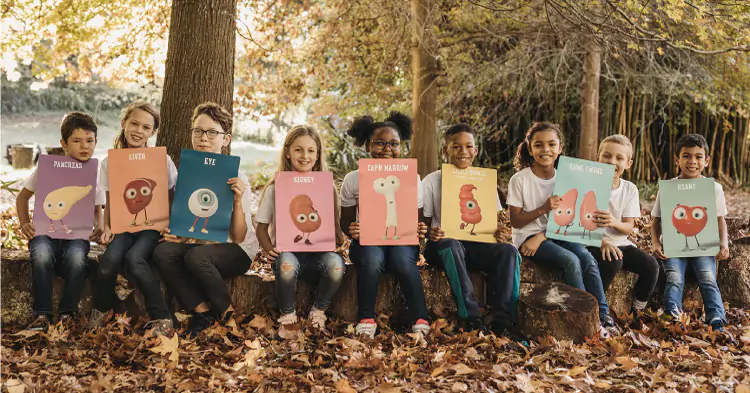
Who are the Orgamites?
The Orgamites are a team of nine life-saving organs. They’re known as the “Mighty Organs” because they represent the transplanted parts of the body. Featured in films, games and learning tools, these lovable characters help young students (and their teachers and parents) to connect with and appreciate the roles of their organs, while also learning about donation, as well as how to take better care of their health, each other and the world.
Orgtober’s Mission
Initiated by the Orgamites, the only global organ donation awareness program of its kind, Orgtober’s mission is this: to make kids everywhere more aware of their amazing organs, then get more families talking about organ donation, and thereby, increase the amount of organ donors in the long term which will ultimately save more lives.
“While the Orgamites’ range of toolkits have already become much-loved parts of thousands of students’ classrooms here in Canada, Greece and the UK, the launch of Orgtober is a first for Canada (presented by Canadian Blood Services), who will be leading the way… showing schools, organizations and individuals everywhere how it’s done,” says Orgamites founder, Roydon Turner.
“Together, we hope to raise much-needed awareness that will ultimately raise the numbers of lives saved–both here in Canada, and globally.”
Why bring the Orgamites to elementary students?
Most parents and teachers don’t get around to talking about organs and organ donation with their kids. But it’s only when we know better that we can do better—by taking better care of our organs and choosing what to do with them when we know longer need them. The lessons and resources are not intended to recruit students to join organ donor registries. Rather, they enable educators to teach the subject in a way that ensures that the beliefs and values of students are respected and that they can decide about donation that is right for them.
Knowledge is key to addressing young people’s concerns about organ and tissue donation. It can help them feel empowered to talk about donation with their families and equip them to make informed choices in the future. Teach it. Learn it. Talk about it. It’s vitally important.
To learn more about Orgtober, watch this introductory video, and visit orgamites.ca to discover the Mighty Orgamites and download your free teaching resources for use during Orgtober and beyond.
For more educational resources for all grade levels visit: learn.organtissuedonation.ca.

TEACH is the largest national education publication in Canada. We support good teachers and teaching and believe in innovation in education.