By Allison Nichol Longtin
An inclusive period literacy program empowers youth to advocate for their health.
Many educators would agree that teaching students about menstruation is an important part of health education. Many would also agree that we’re short on time and period-focused educational content. Young people are often left to learn about periods on their own. The result? Misinformation, perpetuated taboos, stigma, and shame around periods, and undiagnosed health issues like endometriosis.
Endometriosis (or endo) is a prevalent period-related health issue:
- At least 1 in 10 girls, women, and unmeasured numbers of two-spirit, transgender, and gender-diverse people live with endo. This means that almost 2 million Canadians have endometriosis.
- Endo can be very painful and can prevent people from living a full life.
- 6 in 10 teens and youth with endo face challenges in school due to pain.
- 4 in 10 people with endometriosis have difficulty reaching their educational goals.
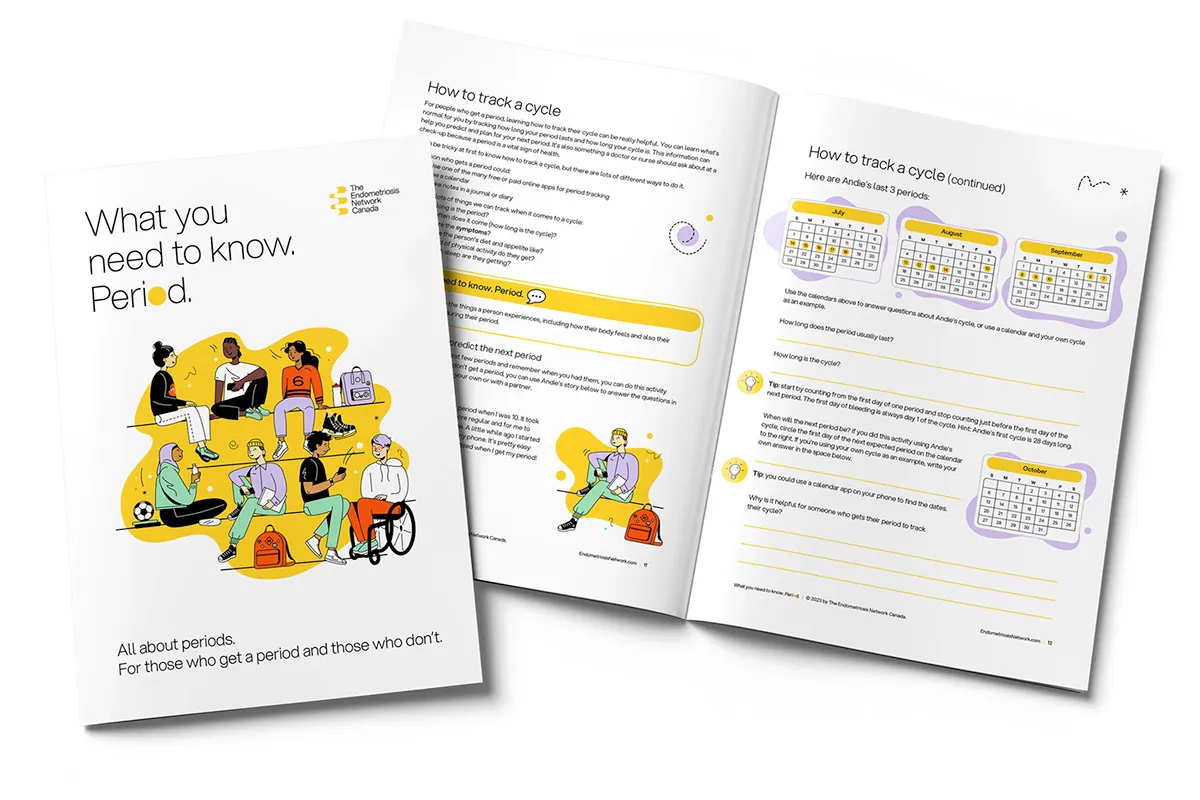
Not teaching students about periods is doing young people a disservice. Despite the evidence to support the positive impact of menstrual health education in schools, it’s not included in the curriculum. To support educators in integrating menstrual health into existing curriculum, The Endometriosis Network Canada developed the What you need to know. Period. program. This bilingual period literacy program for youth is peer- and physician-reviewed and was created in consultation with youth and educator advisory committees.
The Endometriosis Network Canada is a national registered charity dedicated to raising endo awareness, providing support, and sharing educational resources. Our work to develop this resource is funded by the Health Canada Sexual and Reproductive Health Fund.
The What you need to know. Period. program is free and may help reduce the 5-year average delay to diagnosis for people with endo by educating young people about normal and abnormal period pain.
This article explores how inclusive menstrual health programming can help build confidence, foster empathy, and empower young people to advocate for their health.
Inclusive menstrual health education fosters empathy and breaks down taboos
We developed the What you need to know. Period. program to help raise awareness and break down taboos about periods and related health issues like endometriosis. The content is designed for a wide range of youth (ages ~8–18) of all genders, identities, and sexual orientations. This information is for everybody, not just for people who get a period.
It’s not a secret that some of us get a period, but there is a lot of mystery and misinformation out there about menstruation. We want to put an end to the secrecy now. Period. And it starts with teaching menstrual health to all of your students: students who get a period, students who will eventually get a period, and students who will never get a period.
You can’t always tell if someone gets a period just by looking at them. That’s why we’ve used inclusive language in the development of this program and why we recommend delivering the program to all of your students.
Taboos about menstruation and lack of menstrual health awareness are key contributors to poor understanding of menstrual health. Teens and youth who are worried about their period often conceal their symptoms out of shame, feel uncomfortable discussing them with peers or trusted adults, or believe their symptoms are normal. When young people do disclose their concerns, peers and trusted adults may reinforce feelings of shame and inaccurate beliefs about menstrual health. The consequence is a culture of poor period health literacy.
Menstrual health education in schools is a powerful tool to address taboos and lack of awareness about menstrual health. Watch this video to learn more about the positive impact of period literacy.
Teaching youth to advocate for their health builds confidence
The What you need to know. Period. program is designed to empower young people to learn about their bodies and to advocate for their needs and what’s right for them. It’s a giant leap toward creating healthy behaviours that can last a lifetime.
We recommend that educators take a strengths-based approach to delivering menstrual health content. There are no rights or wrongs when we’re talking about our own body, our own experience of being in the world and in our body. What you need to know. Period. emphasizes that we’re the expert on our own body and we get to decide what happens to it.
The range of experiences of having a period can be drastically different. Taking a strengths-based approach to teaching period literacy will help your students build confidence in their ability to ask for help when they need it.
Freya, a youth advisor with lived experience with endo, shares her thoughts on the program.
How does educating young people about periods create positive change?
Researchers at the University of British Columbia studied students of all genders in Grades 8–12 who took a 60-minute educational program about menstrual health. The randomized controlled trial found that after participating in the program, students’ knowledge about menstrual health increased and their attitudes about menstruation became more positive.
Results of the study also showed that the students:
- Understood that getting really painful cramps that make you miss activities during your period is not normal.
- Knew that a person with really painful periods should talk to someone they trust, like a parent, teacher, elder, or healthcare provider, about their symptoms.
- Felt more confident in their menstrual health knowledge and were more comfortable discussing menstrual health.
- Agreed that the program taught them something new and that people like themselves would benefit from learning about menstrual health.
Overall, the research indicated that when we teach young people about periods, their knowledge improves and they have more positive beliefs about menstrual health.
Integrate period literacy into existing health education
What you need to know. Period. is a ready-to-deliver program, which includes a workbook as well as facilitator training. We knew that talking and learning about periods might enter into sensitive and challenging territory, for students and teachers alike, which is why we developed training to support these discussions in the classroom.
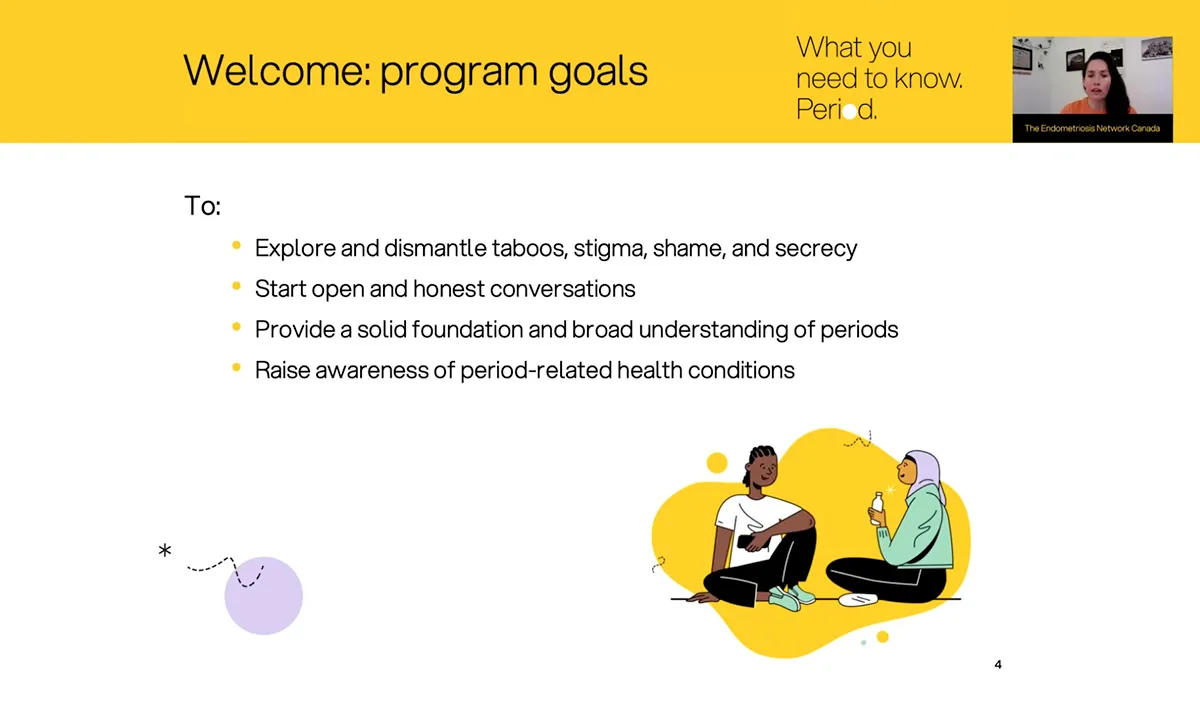
The comprehensive period literacy program gives you the tools and the training to help prepare you for delivering the content to your students in whatever way works best for you and your group.
Periods are a part of life for many people. Equally, many people aren’t comfortable talking about periods, whether they get one or not. It’s okay to be private about some things, but periods don’t need to be a secret. The training explores best practices for talking about periods using clear language to break down taboos and stigma about menstruation.
We designed the program so that it could easily be integrated into existing health curriculum. Teachers could:
- Deliver the workbook in whole or in part (there’s around 2 hours of content in the workbook).
- Integrate workbook content into existing sexual health programming.
- Deliver the workbook in a group setting or one-on-one.
- Facilitate the program in-person or remotely.
- Adapt the content for younger or older audiences, or youth with barriers.

Allison Nichol Longtin is a writer, educator, and curriculum developer based in Belleville, Ontario, Canada. She’s a lifelong learner and an advocate for literacy. Her work has appeared in Business Insider, HuffPost, and Chatelaine.