UltiMaker, a global leader in 3D printing solutions for manufacturing, defense, and education, is proud to announce Kimberly Mawhiney as the first awardee of the recently launched MakerBot Grants. Designed to help K–12 educators bring 3D printing into the classroom, the MakerBot Grants reflect UltiMaker’s continued commitment to making 3D printing tools and resources more accessible to teachers and students everywhere.
Kimberly Mawhiney is the Director of STEM and Grants at Northeast Academy for Aerospace and Advanced Technologies (NEAAAT) in Elizabeth City, NC. As part of the program, Kimberly Mawhiney will receive a full MakerBot 3D printing bundle, valued at over $4,000.
“This 3D printer grant is a game-changer for our middle schoolers!” said Mawhiney. “It means their ideas will leap from imagination into tangible creations, building critical STEM skills. It’s truly empowering them to design and innovate their future.”

The Northeast Academy for Aerospace and Advanced Technologies is an innovative regional Public Charter STEM school. The learning environment emphasizes work and accountability in small teams, hands-on construction of real products and prototypes, and pervasive use of technologies to support learning both within the school and flexibly anywhere.
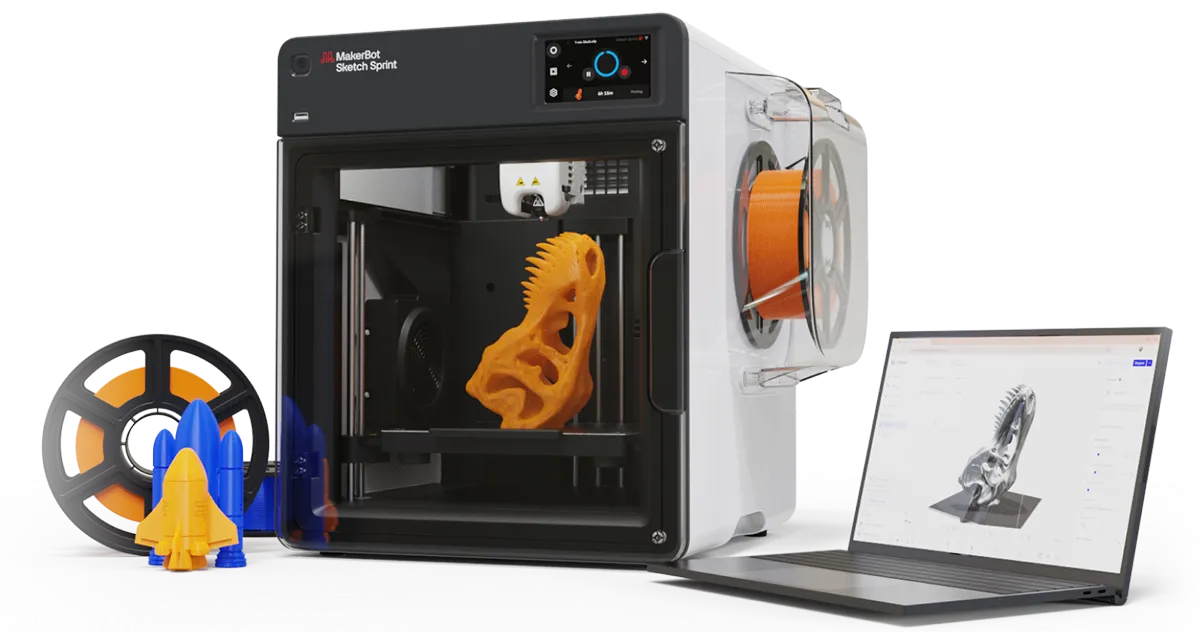
Each MakerBot Grant includes:
- 1 MakerBot Sketch Sprint 3D printer
- 20 spools of PLA filament
- 1 copy of the MakerBot Educator’s Guidebook
- Classroom Certification (seats for 1 teacher and 30 students)
- A three-year UltiMakerCare service plan for the MakerBot Sketch Sprint 3D printer
Integrating 3D printing into the classroom supports cross-disciplinary learning in science, technology, engineering, arts, and math, as well as other subjects. It helps students develop critical skills—such as problem solving, creativity, design thinking, and collaboration—while engaging them in active, project-based learning.
The MakerBot Grants program is part of the MakerBot Gives Back Initiative, a pledge to provide $500,000 in 3D printing equipment and resources to schools in underserved communities. This initiative expands UltiMaker’s mission to give more educators the resources to introduce 3D printing and bring STEM into their everyday teaching. Since launch in January 2025, MakerBot Gives Back has donated over $136,000 to schools, STEM organizations, and makerspaces across the U.S. and Canada.
“Launching the MakerBot Gives Back Grant Program with such a passionate educator sets the tone for everything we hope to accomplish—putting powerful tools into the hands of those who are driving meaningful impact in the classroom,” said Andrea Zermeño, Manager–MakerBot Education, UltiMaker. “This is more than a donation; it’s an investment in the future of design thinking, STEM learning, and student innovation.”
UltiMaker remains focused on supporting educators who are preparing the next generation of innovators. The MakerBot Grants program is a key part of that mission—empowering teachers and unlocking new possibilities for students everywhere.
To apply for MakerBot Grants, visit www.makerbot.com/makerbot-gives-back.
About UltiMaker
UltiMaker is focused on shaping the future of manufacturing, product development, and education. Through a wide range of cutting-edge 3D printing solutions, including the popular S-, Factor-, and Method series—one of the widest portfolios of 3D printing materials on the market—and leading 3D printing software platforms Cura and Digital Factory, UltiMaker is paving the way for innovation across industries. Visit www.ultimaker.com.
MakerBot is the education brand from UltiMaker, and the only 3D printing ecosystem tailored for classroom learning, educational advancement, and skills development. For 15 years, MakerBot has been used in the classroom to transform learning and STEM curricula through comprehensive 3D printing resources, including ISTE-aligned training programs, curriculum development and design thinking courses, funding guides, tutorials, educational webinars, professional development, hundreds of lesson plans, an active and supportive community, and more. Visit www.makerbot.com.
TEACH is the largest national education publication in Canada. We support good teachers and teaching, and believe in innovation in education.