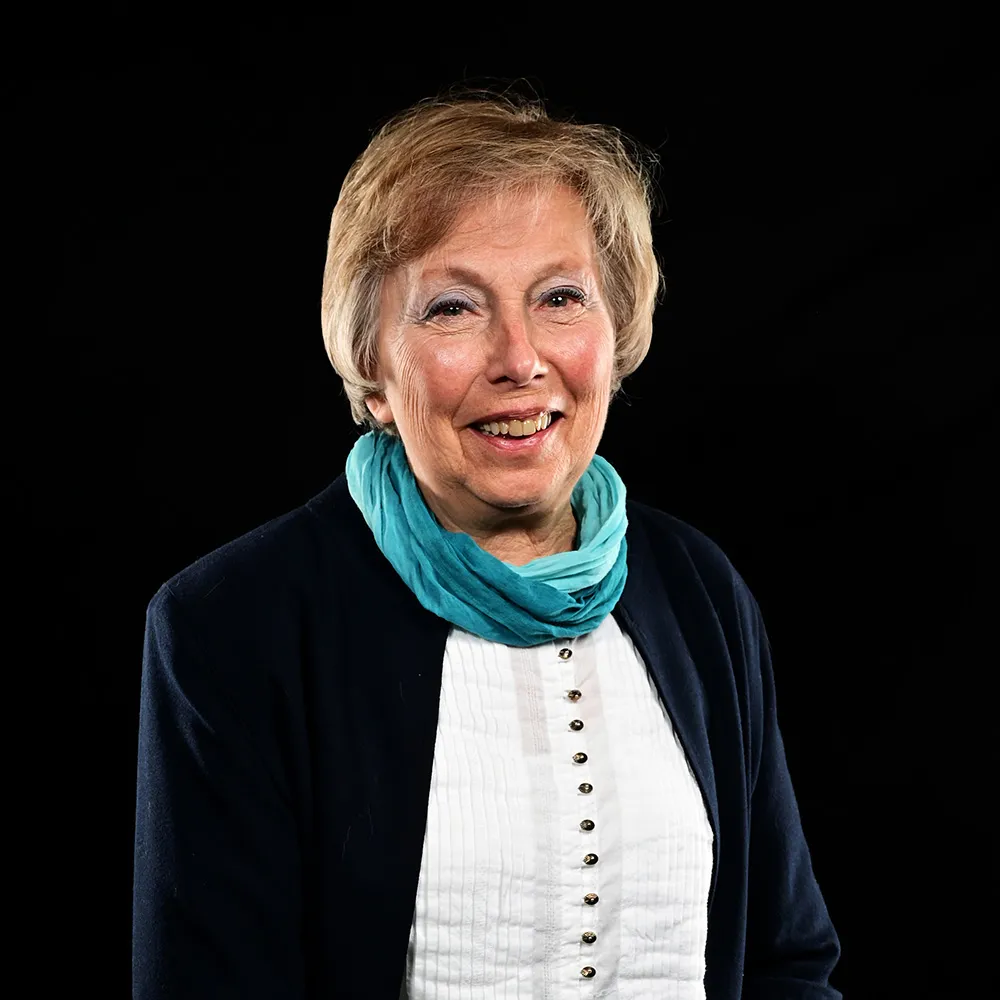
By Sue Blyth Hall
“I didn’t know that I didn’t know what dyslexia is.”
This is my favourite line from the soon-to-be-released documentary, WHO KNEW: Dyslexia Is a Way of Thinking, spoken by an Early Childhood Educator whose son has dyslexia.
Backing up considerably, I founded The Whole Dyslexic Society (WDS) in 2001, which achieved charitable status in 2002. Over its very successful 23 years, the Society has supported those with learning challenges in the wider umbrella use of the word “dyslexia,” incorporating struggles in reading, writing, spelling, math, comprehension, coordination, and attention.
Addressing the Cause
The Society acknowledges the cause of the learning challenges rather than merely addressing the symptoms. If you remove the reason for the problem, the problem ceases to exist.
The problem is that one-third of the population simply learns differently from the way they are taught. They share the underlying “gift” of dyslexia, which is an ability to alter perception. This ability leads to numerous incredible talents in the 3D world and various challenges in the 2D world of print.
Current remediation does not address this ability, and when individuals begin to struggle, they are merely given more of what caused the problem in the first place—predominantly, more phonetic instruction. The accommodations that are offered, such as more time, a scribe, a reader, a Chromebook, text-to-speech, and speech-to-text, appear to be helpful, but in fact, they absolve the education system of any responsibility to reach these children.
The consequence of this is that wonderfully bright, intelligent, creative children grow up with an undeserved, inaccurate label of learning disabled and believe themselves to be less smart than their peers.
These children deserve to be able to learn in their own style.
Our Approach
The program we advocate empowers the individual child by providing them with the ability to self-regulate, along with strategies based on their own learning style. They also have the chance to resolve any issues with the letters of the alphabet by using a hands-on, creative 3D material, thus allowing these children to learn to read in the visual way they were born to.
As the innately picture-based, hands-on learners that they are, these children are also taught how to provide themselves with the three parts to every word: the meaning, the spelling, and the pronunciation. They master words, rather than merely trying to memorize letters as they have attempted to do in the past.
Exciting Developments
The 2024 year was an exciting one for the Society, as we received funding for two major projects.
Firstly, TELUS STORYHIVE funded the creation of a documentary about our approach. WHO KNEW: Dyslexia Is a Way of Thinking will go out on TELUS Optik on December 2, 2025. Private screenings are happening all over Canada, and will take place in the U.K. soon as well.
Secondly, we worked in conjunction with the British Columbia Ministry of Education, via BCcampus, which funded the creation of a professional development pilot for Early Childhood Educators, and the results were astonishing.
Kids ages 3–5 were able to use three self-regulation tools that we provide for focusing, relaxing, and controlling their own energy levels. After that, those ECEs who chose to introduce the alphabet to their children used our hands-on method, again with remarkable success.
Extending these strategies into K–3 classrooms all around the world has enormous potential to support these learners. Research supports this proactive approach.
Once our education system is truly neuroinclusive, allowing the talents of all learners to thrive and fulfil their potential, society as a whole will benefit from the dyslexics’ compassionate, creative, inventive, out-of-the-box problem-solving abilities.
Interested parties can learn more about the two-day K–3 teach workshop and the Early Years workshop at www.thewds.org/dls-workshop.
Find The Whole Dyslexic Society on social media: Facebook, Instagram, and LinkedIn.
Sue Blyth Hall is a Davis Dyslexia Correction Facilitator, author, and founder of The
Whole Dyslexic Society, inspired by her son’s transformation through the Davis method and her own discovery of being dyslexic. Since 1998, she has worked internationally to expand outreach, improve access, and build community around a strengths-based approach to learning differences. Her work includes a TEDx talk, the book Fish Don’t Climb Trees, and the upcoming documentary WHO KNEW: Dyslexia Is a Way of Thinking (2025).