By Shawn Young
Artificial intelligence (AI) is reshaping many aspects of our lives, and its impact on education is no exception. As classrooms evolve, AI has emerged as a powerful tool—not as a replacement for teachers, but as a resource enhancing their ability to focus on what matters most: connecting with students and inspiring learning.
Findings from the 10th annual Educator Confidence Report (ECR) reveal that educators are embracing AI’s potential to save time and improve instructional effectiveness. It is opening doors to new possibilities in teaching.
The Current State of AI in Education
Over the past year, the use of generative AI in education has skyrocketed. Its adoption increased fivefold among educators, according to the ECR. Among those using AI, 73% report it saves time, and over one-third describe the time savings as “a great deal.” From generating lesson plans to automating administrative tasks, AI tools are quickly becoming integral to classrooms.
Educators are confident in the ability of these tools to support instruction, with many pointing to improvements in personalized learning and formative assessment. For example, AI tools help tailor lessons to individual student needs, making differentiated instruction more achievable. Resulting in increased efficiency, they create richer learning environments where teachers can prioritize relationships with their students and increase their engagement.
Time Back for Teachers—and New Pedagogical Possibilities
One of AI’s most compelling benefits is the ability to free educators from repetitive and time-intensive tasks so they can effectively focus on their students. However, AI’s potential goes beyond saving time; it is enabling entirely new pedagogical approaches.
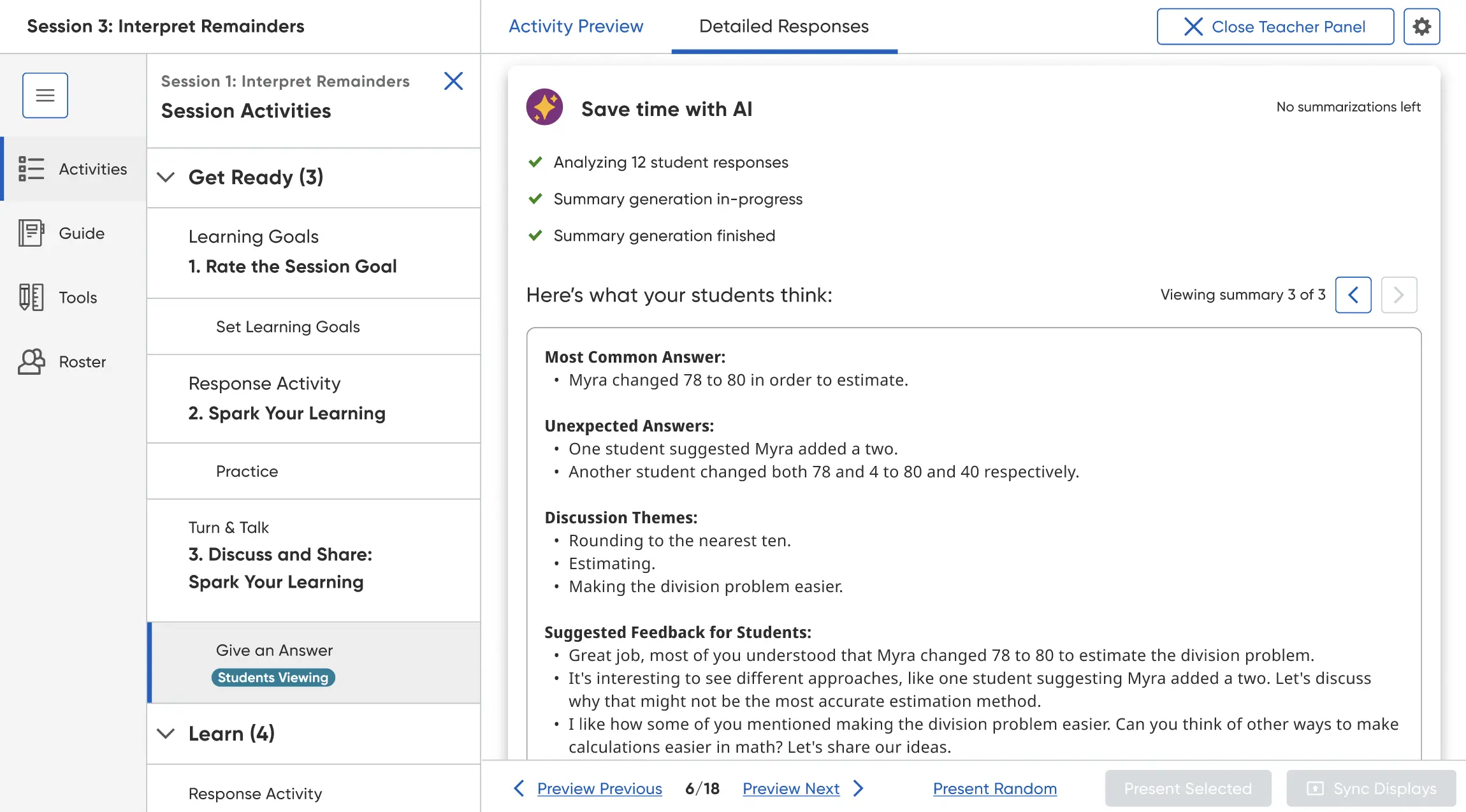
Take HMH Classcraft’s AI Summarization feature, for example, which builds upon the research-backed approach of “Turn and Talk.” The tool allows teachers to effectively “listen in” on 15 simultaneous peer conversations in the classroom and quickly generate a summary of key insights. AI gives teachers real-time visibility into student discussions. Hence, empowering them to adjust lessons, fostering deeper engagement and understanding.
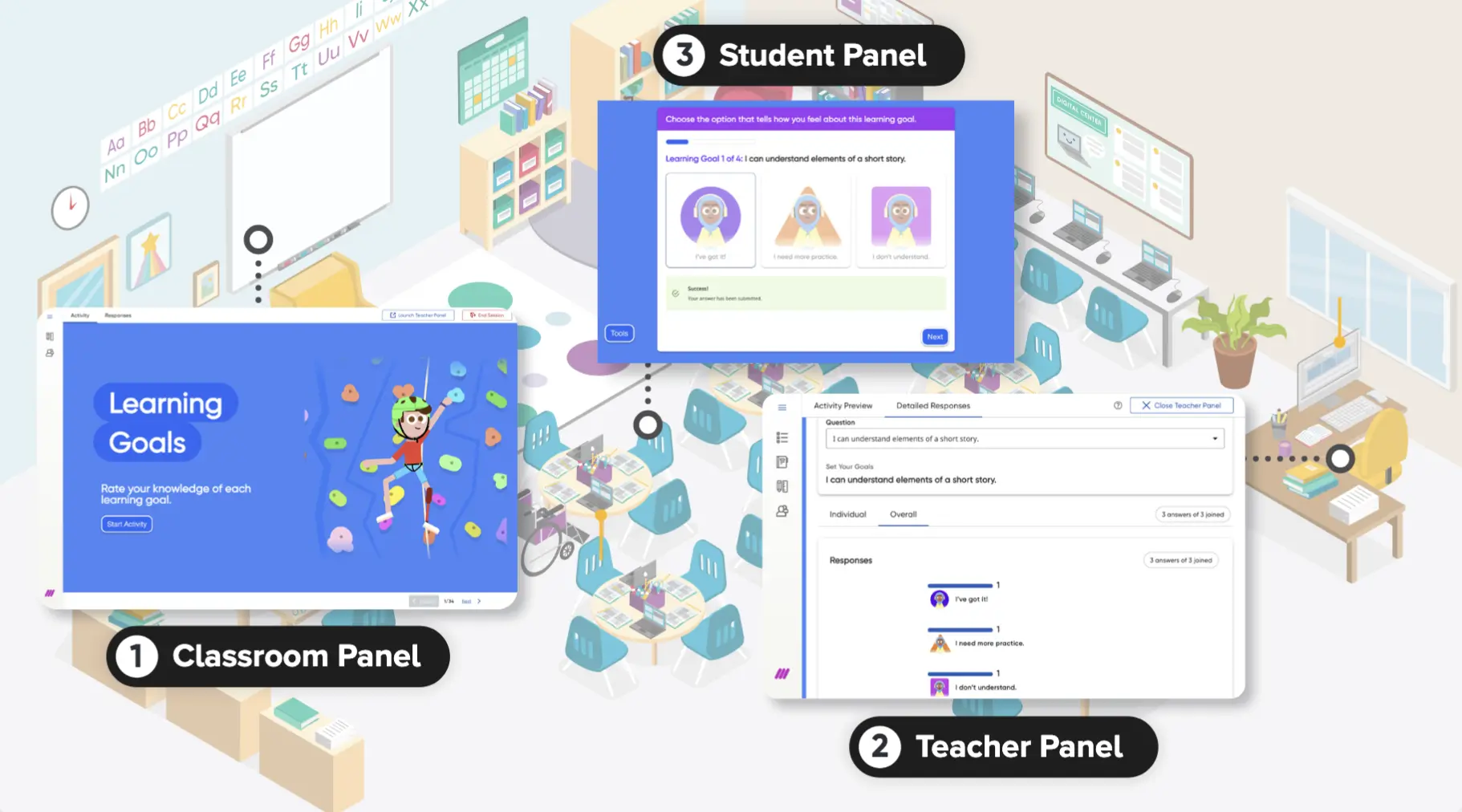
These advancements represent a shift toward what some call “whole-class differentiation.” Rather than focusing solely on individual students, AI tools provide actionable data that helps teachers address common misconceptions or trends across an entire class. The result is a more cohesive, responsive learning environment that supports all students while maintaining a sense of collective progress.
The Future of AI in Education
Looking ahead, AI holds even greater promise for transforming education. Unified platforms like HMH’s ecosystem are seamlessly integrating AI-driven tools with curriculum planning, formative assessment, and supplemental practice. This integration ensures that technology enhances, rather than disrupts, the flow of teaching.
AI-powered analytics will also play a pivotal role, offering teachers deeper insights into student learning. Imagine tools that identify areas of struggle and also suggest tailored instructional strategies, all while preserving teachers’ autonomy and creativity. These innovations will help educators make more informed instructional decisions more easily and quickly—ensuring every student has the opportunity to succeed.
Of course, as with any new technology, there are challenges. Concerns about plagiarism and over-reliance on AI underscore the need for solutions equipping teachers to use these tools ethically and effectively. Educators can harness AI’s benefits by fostering a balanced approach, while maintaining the human connections that define great teaching.
AI is not designed to replace teachers; it is intended to aid teachers’ work. By providing actionable insights, AI creates space for educators to focus on what they do best: inspiring students and building relationships.
HMH is especially excited about the transformational potential of these technologies in the context of their broad set of solutions. As they continue to develop and refine these tools, they’re committed to ensuring that AI serves as a partner. It fosters dynamic, relationship-rich classrooms where all students thrive.
The future of education is not defined by technology alone, but by how we use it to enhance learning. Keeping educators at the center of this transformation can create a brighter future for students and teachers alike.

Shawn Young, SVP, Product Management and Strategy, Core Classroom and Integrated Solutions, has a background in education, technology development, and entrepreneurship. He is the co-founder of Classcraft, an innovative system designed to increase student engagement through gamification in the classroom.