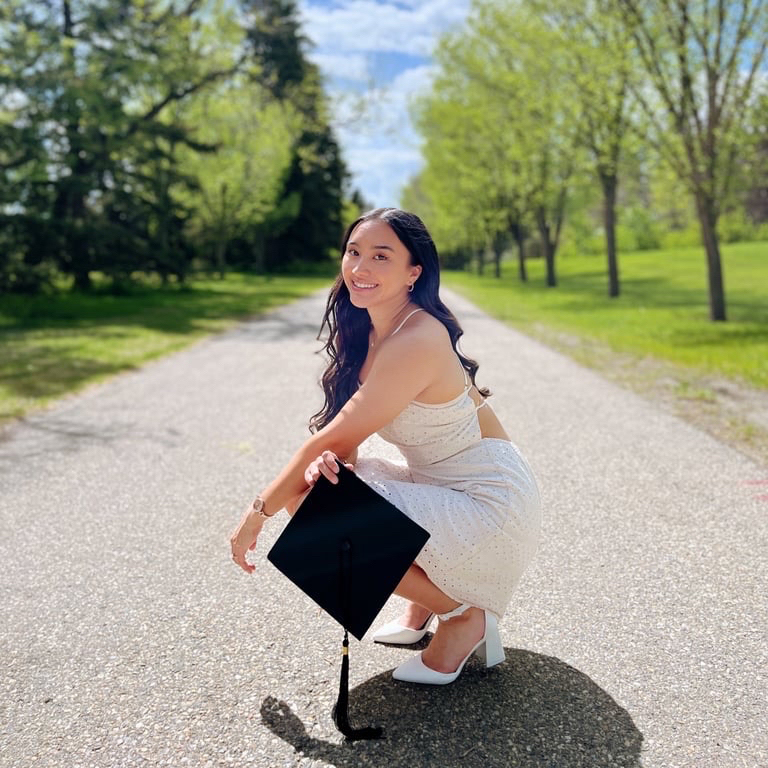
By Stephanie Mah
Whether in school, the media, extracurriculars, or everyday life, it’s essential for young kids—especially girls and those from minority backgrounds—to see themselves reflected in others. The phrase, “If she can do it, I can do it,” is more than inspirational—it’s transformational. Representation helps young people know there is space for them in any field they choose, especially in STEM, where this visibility is often lacking.
For my undergraduate capstone at the University of Calgary in 2020, I explored how parental influence and social factors shape the identity of mixed-race youth. During that research, I came across the phrase, “If you can see it, you can be it,” which sparked my curiosity about representation’s role in shaping self-identity.
I pursued this further during my Master of Arts in Cultural Studies at Queen’s University. In a course titled “Critical Theories in Education,” I focused on self-efficacy—how children develop belief in their abilities from a young age. My studies revealed a lack of self-efficacy development tools for girls in STEM, which led me to create the Women in Science and Engineering (WISE) Girls toolkit.
This project is deeply personal. As a mixed-race girl growing up, I often struggled to see myself in successful leaders, scientists, or innovators. This toolkit is designed to offer what I once needed: a chance for girls to believe in themselves through accessible, encouraging, and positive STEM-based experiences. It equips teachers, mentors, and youth workers with resources to help girls build confidence and see themselves as future leaders in STEM and beyond.
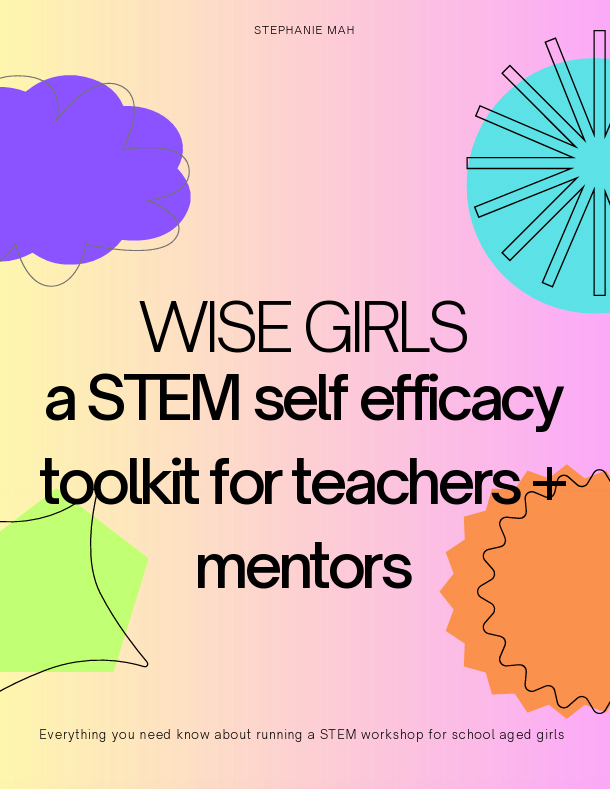
Inside the toolkit, educators will find a WISE Girls Workshop—an adaptable model that can be used in classrooms, after-school programs, or summer camps. It is designed specifically for girls, with female mentors also leading the sessions, in order to reinforce the importance of relatable role models.
The workshop includes hands-on STEM activities such as Tinfoil Ship Building, which combines physics, engineering, and creativity. Girls build and test ships made of tinfoil, learning about density and buoyancy. They sketch designs, write imaginative stories about their ships, and revise their builds if they sink. This encourages problem-solving and learning through iteration, rather than focusing on immediate success.
Another activity, Making Ice Cream, introduces girls to chemistry and physical sciences through a fun, hands-on process. While making ice cream from simple ingredients, they learn about states of matter, temperature, and molecular changes. This activity also includes reflection worksheets and encourages collaboration and creativity.
Beyond the activities, the workshop features a Career Awareness and Mentorship Session, where girls can meet real women in STEM, and a Parent-Daughter Social, which helps extend the learning experience to families. The program ends with a certificate ceremony to celebrate participation and boost confidence.
The ultimate goal is to create a safe, supportive, and joyful space where girls feel inspired, capable, and confident in their abilities, and are reminded that no dream is too big. With the right support and visibility, they too can say, “I see her. I can be her.”
Stephanie Mah is a writer, researcher, and advocate with a master’s degree in Cultural Studies from Queen’s University. Her work focuses on equity, representation, and the experiences of mixed-race youth, particularly in education and STEM spaces. Based in Calgary, she is passionate about creating more inclusive communities where all young people can see themselves reflected and empowered.