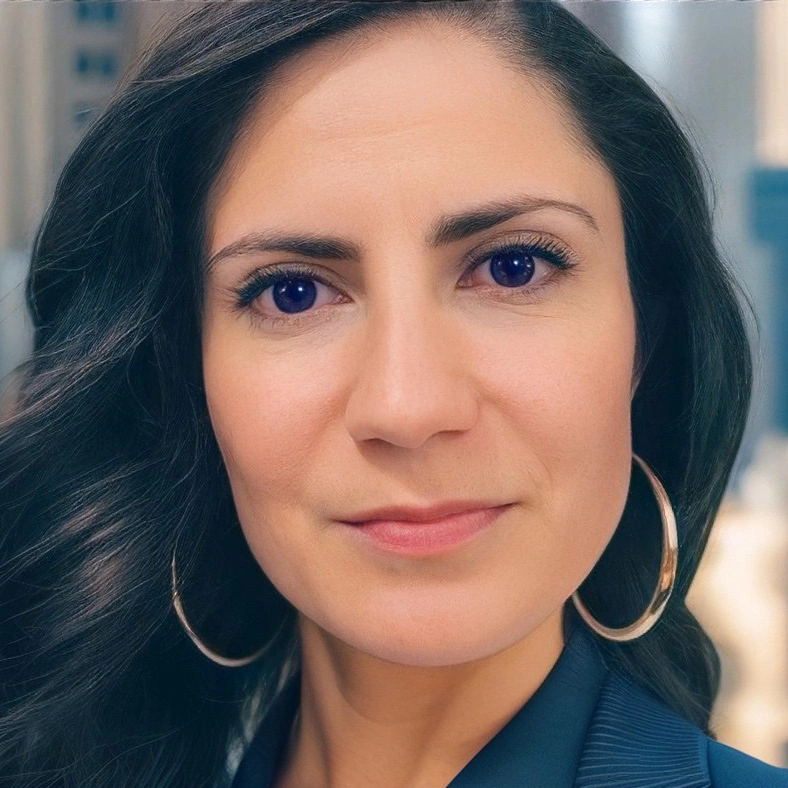
By Dr. Conchita Hernandez
All students have the right to learn; however, not all of them are provided with the necessary tools to do so. According to the Department of Education, about 15% of all public school students receive special education services. Likewise, 69% of students that are blind or have low vision are in public school general education classrooms.
Educating blind and low-vision students takes creativity and perseverance—due to inaccessible curriculum that is vision based, and educators not having the knowledge or training on how to work with this population. But now technology is allowing us to educate students with disabilities in a way that was not possible in the past. AI in particular has created options for blind and low-vision students that were unimaginable before.
Texts can be summarized, paper documents read out loud, and visual descriptions of what is in a room can be provided (including for clothing and fabric colours, which is a big help when it comes to choosing what to wear). Prior to AI, a blind or low-vision person would have to wait for someone to help with these tasks.
AI as an Educational Tool
At the Maryland School for the Blind (MSB) we often tell students that they must, “Learn to use all of the tools in the toolbox.” The idea is that the more tools students have available to them, the better off they will be.
There is no such thing as one tool, technology, or curriculum that serves as the magical solution for students and educators. What makes a good tool is an educator who can thoughtfully implement it and match it to a student’s needs. Technology, ideas, and curriculums are only as good as the educator that knows how to use them.
Ben, one of our orientation and mobility instructors, notes that, “AI has the potential to provide access to information for people with disabilities that was previously out of reach. Because its output is only as strong as the input it receives, the ability to ask informed, well-structured questions is more important than ever. It is now essential for educators to teach the foundational critical thinking skills needed to maximize the benefits of AI while guarding against misinformation.”
AI allows our students to access information like never before and, while we should encourage this, at the same time we must also educate students on the ethical use of AI and how to critically think about the responses it gives. It is important to keep in mind the privacy concerns of each platform as well.
Practical Applications of AI
AI is never going to be the answer to our issues in education, but at the same time, educators need to know how to use it so that we have another tool in our toolbox.
In the education of blind and low-vision students specifically, there is so much more that goes into preparing a lesson, ensuring the content is accessible, and making it engaging. At MSB, we have been embedding AI into our instruction in a way that is meaningful and centres both students and educators.
One way we have done this is through lesson planning. Our educators have access to MagicSchool, a tool specifically built around education and standards. Educators can take their knowledge and use AI to help them prepare engaging lessons that are adapted to students with more complex needs.
Another innovation we have been using is the Ray Ban Meta Glasses. For the first time, blind and low-vision students can read documents independently, get summaries, know what is in front of them, and so much more.
Our orientation and mobility instructors are using the glasses to teach students how to safely navigate their environments. The AI component also works well for more complex learners who may struggle with memory issues or task management, as it allows them to set prompts on the glasses, note physical landmarks, and even remind students of what routes to follow.
Our learners are excited about the potential of what AI can do for them to grow their independence, and so are we! AI is here to stay, and when we learn how to use it ethically and critically, we can prepare our students for success beyond our classrooms.

Dr. Maria “Conchita” Hernandez Legorreta is a blind Latina education leader, disability advocate, and innovator transforming access for blind and low-vision students. Born in Mexico and raised in California, she serves in Special Projects at the Maryland School for the Blind. As co-founder of the National Coalition of Latinx with Disabilities and founder of METAS (Mentoring, Engaging, and Teaching All Students), she also trains educators across the U.S. and Latin America on inclusive practices, engages policymakers on disability rights, and supports multilingual families navigating IEPs in English and Spanish.