Common Sense Media recently released its brand-new Digital Literacy & Well-Being Curriculum for K–8 students. This new curriculum is more than a simple update to Common Sense Media’s trusted and widely-used K–12 Digital Citizenship Curriculum—it’s a reimagined understanding of what digital literacy and well-being education needs to be, identifying the essential knowledge, skills, and mindsets students need to thrive in a tech-filled world.
Common Sense Media’s curriculum has been the gold standard in digital literacy education for 15 years, helping educators across the globe teach their students how to navigate a complicated and often confusing online world. The curriculum now reaches 92,375 schools across all 50 states and abroad, 53 percent of which are registered as Title I.
Common Sense Media undertook a major overhaul of its curriculum in response to growing concerns about the challenges kids face in our rapidly changing digital world. Tech use continues to age down—kids are digital from day one, and the skills and mindsets they need to be taught are continuing to evolve. Additionally, a rise in mental health challenges among young people has necessitated a greater focus on mental well-being in digital literacy education. On top of this, schools continue to grapple with phone and AI policies in order to ensure responsible tech use and support student learning.
“We’ve made updates to our free curriculum in the 15 years since we launched it, but the ever-evolving and now AI-driven digital landscape has grown far more complicated for teachers, parents, and kids alike,” said Common Sense Media Founder and CEO James P. Steyer. “Our new Digital Literacy & Well-Being Curriculum goes beyond the basics of digital literacy to help kids navigate the online world and build the skills and habits they need to thrive—both on- and offline.”
The new resources for students and teachers build on the original curriculum’s research-backed lessons, which were developed in collaboration with Project Zero at the Harvard Graduate School of Education, as well as researchers at Georgetown and Cornell. The curriculum updates were guided by direct input from educators themselves.
“Time and time again, teachers have told us they need resources that reflect the realities their students face today, from the rise of AI to online misinformation and addictive social media feeds,” said Common Sense Media Chief Program Officer Yvette Renteria. “Common Sense Media’s revamped curriculum was built with educators, for educators, so they can tackle those challenges, meet the rising need for digital literacy, and help students think critically and act responsibly in our fast-changing digital world.”
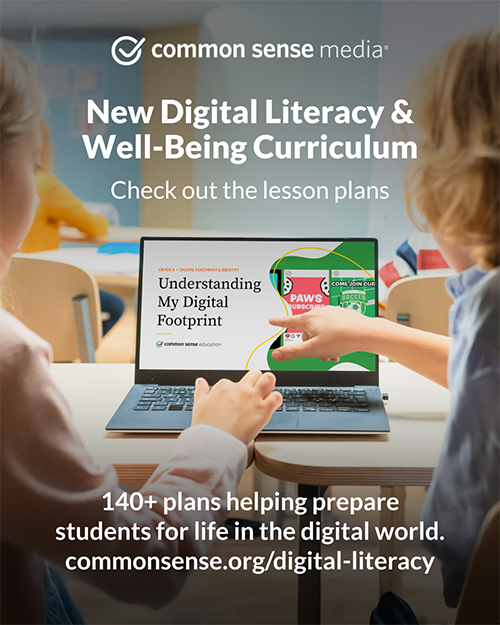
Among the resources included in the new Digital Literacy & Well-Being Curriculum are:
Nearly 150 new lessons, including AI literacy lessons with a recommended scope and sequence for each grade.
New family resources to help reinforce responsible digital habits at home.
Shorter lessons and flexible formats, including 20-minute mini-lessons that make it easier for teachers to integrate digital literacy into their already busy schedules.
Interactive and play-based learning.
A stronger emphasis on mental health and well-being, which is more important than ever in a world where kids constantly feel pressure to compare themselves to others.
New professional development resources for teachers.
More information on the new Digital Literacy & Well-Being Curriculum can be found here.
About Common Sense Media
Common Sense Media is dedicated to improving the lives of kids and families by providing the trustworthy information, education, and independent voice they need to thrive. Our ratings, research, and resources reach more than 150 million users worldwide and 1.4 million educators every year. Learn more at commonsense.org.

TEACH is the largest national education publication in Canada. We support good teachers and teaching, and believe in innovation in education.