By Adam H. Smith
Across the United States, schools are grappling with an issue that didn’t exist just a generation ago: how to balance the benefits of technology with the very real disruptions caused by smartphones in the classroom. As of August 2025, 35 states plus Washington, DC, now limit cellphone use in K–12 schools, and 37 states overall have enacted restrictions—many with strict “bell-to-bell” bans.
The results of these policies are clear. Studies and firsthand reports confirm that limiting phone use improves classroom focus, reduces distraction, and even strengthens peer-to-peer social interaction. Students engage more deeply with their teachers and classmates when they are not tethered to their devices. For educators, the benefits are unmistakable. But passing a policy is only half the battle. The real challenge is enforcement.
We’re seeing this play out most visibly in New York City, the largest school district in the United States, where schools are scrambling to comply with their new smartphone ban. Widely used pouch systems have proven vulnerable to hacks and workarounds. This raises a critical question: if schools are serious about limiting phones, how can they enforce these policies in a way that is both practical and effective?
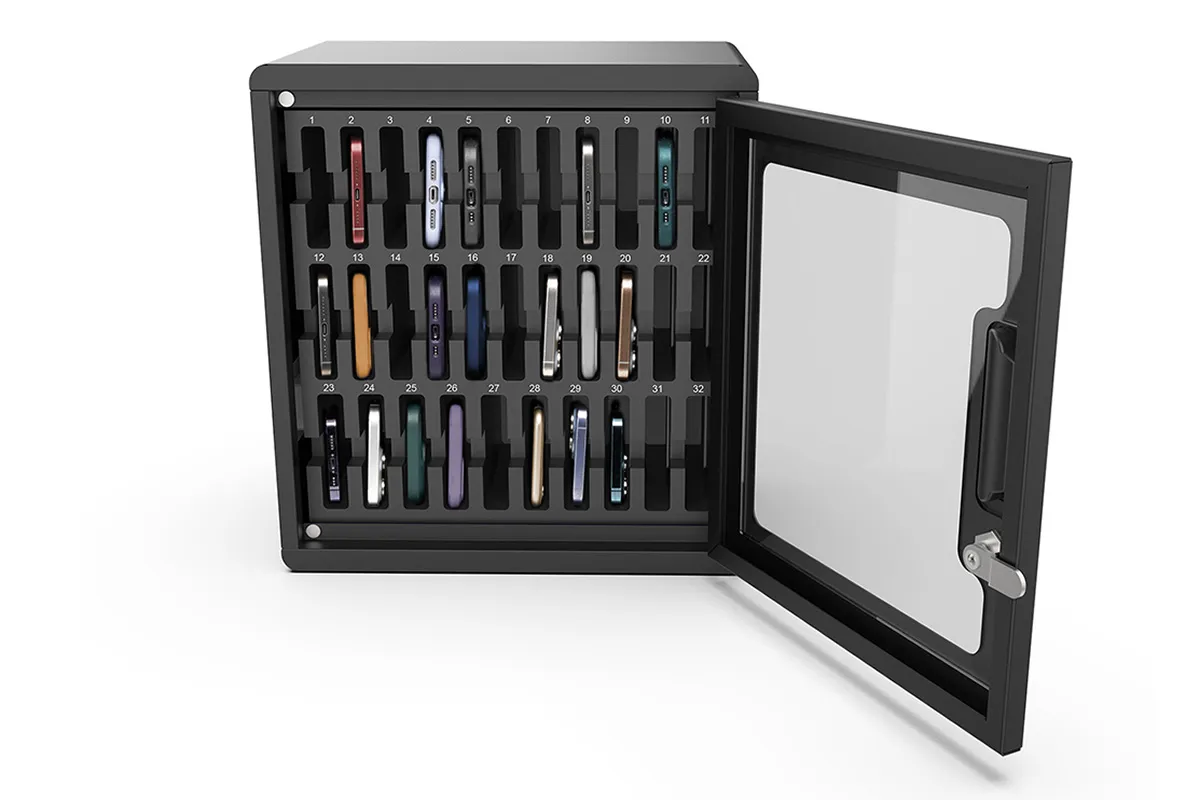
At Luxor, we developed CellGuard™ to answer that exact question. Unlike pouch-based systems that can be tampered with or avoided altogether, CellGuard is a centralized steel storage unit that locks devices securely, deters tampering, and provides a transparent, organized system for every classroom.
Teachers can quickly check devices in and out with minimal disruption, and because phones are stored in plain view, there is no uncertainty about whether a student is following the rules. Already, schools in 35 states are using CellGuard to make sure their policies aren’t just words on paper—they’re a reality in the classroom.
Teachers themselves affirm the urgency of this solution. In a recent survey of 150 K–12 educators, more than half reported that student phone use is a major distraction in class. Nearly two-thirds said they would be likely to purchase CellGuard, and an overwhelming majority—almost 90 percent—agreed that it effectively addresses the problem. These results echo what many educators already know: managing phone use isn’t about restricting freedom, but about creating a focused learning environment where students can thrive.
As schools across the nation implement or strengthen their cellphone bans, enforcement will remain the key challenge. The tools districts choose now will determine whether these policies succeed—or whether students find ways around them. At Luxor, our mission has always been to design workspace solutions that make environments more collaborative, functional, and productive. With CellGuard, we’re proud to extend that mission into the classroom—helping educators ensure that learning, not scrolling, is the center of attention.
Adam H. Smith is the President of Luxor Workspaces, a 69-year-old company dedicated to delivering reliable and flexible solutions that foster more collaborative, functional, and productive work environments. An accomplished B2B executive, Adam has held leadership roles at companies such as ACCO and Newell Brands. He earned his bachelor’s degree in history from Boston College and his MBA from the Kellogg School of Management at Northwestern University.