

Subscribe from $5.99
0,00 USD

No products in the cart.

Why We Need to Start Recognizing the Strengths of Sensitive Children

Advertisement

By Rex Ogle

I was a boy in Texas in the 1980s. At that time, young men were expected to grow into cowboys or firefighters or G.I. Joes. We weren’t supposed to cry or write poetry or enjoy playing with Barbie dolls (who, by the way, had so many cool outfits to wear).

I wanted to be all those things—the things I was expected to be and the things I wasn’t. But when I was growing up, it was impressed upon me that I couldn’t be part of both worlds. I was either one type of boy or the other.

When my mom brought home her new boyfriend—a man who would become my brother’s father and a fixture in my life for twelve years—one of the first things he said to me was, “Well, look at this little fruitcake.” At the time, I didn’t know what to make of the comment. A fruitcake? It took a few years before I realized he was calling out my more effeminate behaviors.

He never said it with vitriol or hate in his voice, but more as a matter of fact. He knew something about me that I wouldn’t understand for years to come, and it was his own odd way of warning me that the world wasn’t supportive of boys like me.
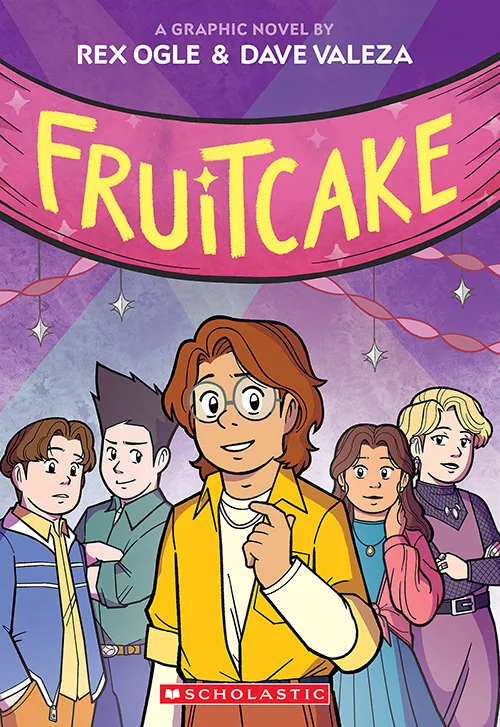
Book cover for Fruitcake by Rex Ogle

I’d like to believe the world has come a long way. In some ways it has, yet in many ways it hasn’t. But what I do know, now, is that there’s nothing wrong with being sensitive. In fact, I’d argue that sensitive boys (and sensitive children in general) make the world a much better place, because they understand what it means to feel othered.

Having and displaying a delicate appreciation of others’ feelings leads to respect, inclusion, tolerance, compassion, kindness, and empathy. And in today’s world, we need all those characteristics in our youth more than ever—and in adults, too.

Any child can (and should) aspire to be whatever they want, from cowboy to firefighter to doll collector. And I suspect that being sensitive—quick to detect and respond to slight changes, signals, and influences—is an advantage, not just in athletics or creative fields but in professional settings and relationships in general.

So yeah, I was a sensitive boy. I was a fruitcake. I still am. And I couldn’t be prouder to have written a book that celebrates my younger self, because without him, I wouldn’t be the person I am today.


The heartfelt conclusion to Rex Ogle’s emotionally resonant and highly relatable Four Eyes trilogy, Fruitcake: A Graphic Novel, will be released on April 7, 2026. Suitable for grades 5–7, the story dives headfirst into the exhilarating and confusing world of first crushes, identity, and self-discovery. Featuring Dave Valeza’s vibrant, colorful, and engaging illustrations, Fruitcake is a tender story of laughter and fear, crushes and coming out, and the courage it takes to embrace who you are.

Rex Ogle is an award-winning author of more than one hundred books for kids, including his memoirs Free Lunch, Road Home, and Four Eyes and Pizza Face. Born and raised in Texas, Rex now lives in Los Angeles, where he writes every day. He still wears glasses, picks at his pimples, and can’t stop eating cake. Learn more about Rex and his books at rexogle.com.

Education News

Supporting Teachers with Tiny Pep Talks

Teaching is meaningful, important, and filled with joys both big and small. But also, let’s face it, there are days where you could use an extra pep talk (or twenty).

Sustainable Professional Wear for Teachers

Teachers make hundreds of decisions every day. Yet one of the earliest decisions happens quietly at home each morning: What am I going to wear today?

Key Forces Shaping K–12 Learning in 2026

The annual report identifies the top challenges schools must overcome, trends driving innovation, and tools transforming teaching and learning this year.

Indoor Air Quality Policies to Make Schools Healthier and More Energy Efficient

In “A Win-Win for Lung Health,” the American Lung Association outlines ten recommendations to improve energy efficiency and ensure healthy indoor air quality.

Why Eighth-Grade Algebra Access Matters

Access to eighth-grade algebra is far from equal. Many students never get the chance to take it before high school, even when they’re ready.

Connecticut State Department of Education Launches New Music-Infused High School Humanities Course

Developed in partnership with TeachRock, the classroom-ready “Course in a Box” An American History of Rock and Soul offers districts an arts-integrated model course aligned to state standards.
Rex Ogle
Rex Ogle
Rex Ogle is an award-winning author of more than one hundred books for kids, including his memoirs Free Lunch, Road Home, and Four Eyes and Pizza Face. Born and raised in Texas, Rex now lives in Los Angeles, where he writes every day. He still wears glasses, picks at his pimples, and can’t stop eating cake. Learn more about Rex and his books at rexogle.com.

Advertisement

Advertisement

Read More

Teaching Through Connection: The Value of Personal Intelligences in the Classroom

Personal intelligences (interpersonal and intrapersonal) sit at the heart of meaningful language learning.

How Belonging Fuels Literacy

Literacy achievement does not happen by accident. It grows through intentional choices—decisions made every day about instruction, environment, and relationships.

Supporting Teachers with Tiny Pep Talks

Teaching is meaningful, important, and filled with joys both big and small. But also, let’s face it, there are days where you could use an extra pep talk (or twenty).

Learning About Money Should Feel Less Like Homework and More Like Real Life

It’s time to start rethinking financial education for the digital generation. Here’s how.

Rethinking Continuity: How Looping Can Transform Classrooms

Students perform better when they experience a stable environment with consistent relationships. One way to achieve this is through looping.

Teaching the Modern-Day Relevance of “Fahrenheit 451”

While Bradbury’s novel was originally written over seventy years ago, its themes are more pertinent than ever—especially in the classroom.