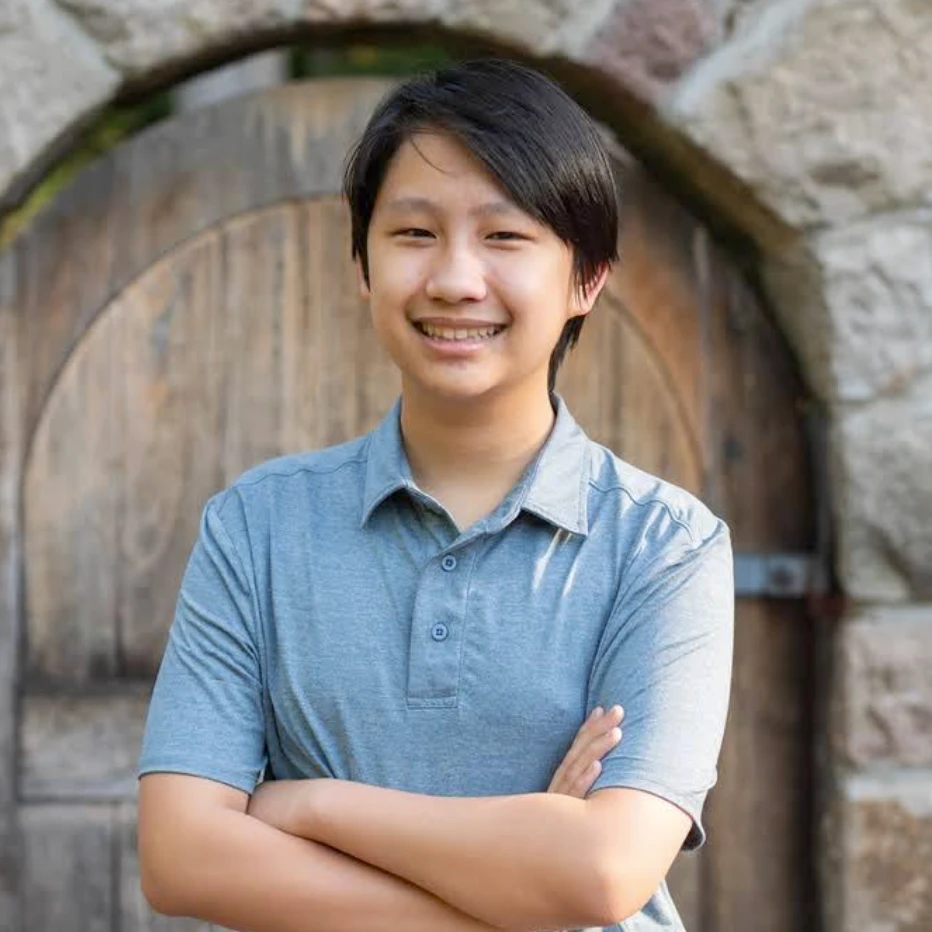
By Spencer Chaisanguanthum
My love of debate was largely by happenstance. It started with a five-day summer camp at the New York City Urban Debate League. There, I discovered the excitement of researching issues, forming arguments, and engaging in spirited discussions with peers equally as curious and determined as I was. In middle school, I joined weekly debate classes at the Bergen Debate Club, and, throughout the pandemic, spent hours debating virtually from my bedroom.
In a world predominated by artificial intelligence, shrinking attention spans, political polarization, and misinformation, debate is a valuable antidote. It slows us down enough to ask, What exactly is the claim here? Where is the evidence? Are these two concepts connected by causation, or simply correlation?
It forces us to research complex topics; to trace, evaluate, and question logic; to develop habits of mind like clarity, empathy, and rigour; and to productively engage with diverse perspectives. And for students in particular, it offers a community of like-minded peers from across the globe. In short, debate has a plethora of well-defined academic and social benefits.
However, as I attended more debate tournaments, I caught sight of a trend: select schools that always seemed to stay in the nicest hotels, own the most pieces of custom-designed merchandise, travel on a chartered bus, and ultimately experience competitive success. This made me start to question the inherent structures of the activity.
I wondered about the staggering cost of residential summer training, and how this effectively limits who is able to attend. I struggled to understand why tournaments, which I had long viewed as bastions of inclusivity and community, only continued to increase entry fees (which have risen 63% over the past decade) while scholarship opportunities dried up.
My peers in Generation Z have grown restless over government inaction on gun control, reproductive rights, and climate change, yet estimates suggest that a whopping 73% of teenagers are anxious about public speaking, hindering their advocacy. In the face of this staggering statistic, no matter how many budget shifts are made, there are too many students who will never be able to access debate.
Founding Eloquence Academy
In 2022, I resolved to channel my frustrations into action. Through countless all-nighters, relentless cold outreach, and 40-plus hour work weeks, what started as a series of local fundraisers has transformed into the world’s largest youth-led 501(c)(3) non-profit organization dedicated to increasing equitable academic debate opportunities for geographically rural and historically underserved students.
Leading 150 volunteers and 39 chapters, Eloquence Academy has offered over 50,000 hours of free debate classes, tournaments, workshops, and in-school programs—serving 3,000 students across 40 states and 20 countries while saving families a total of $4,243,780 in traditional program costs.
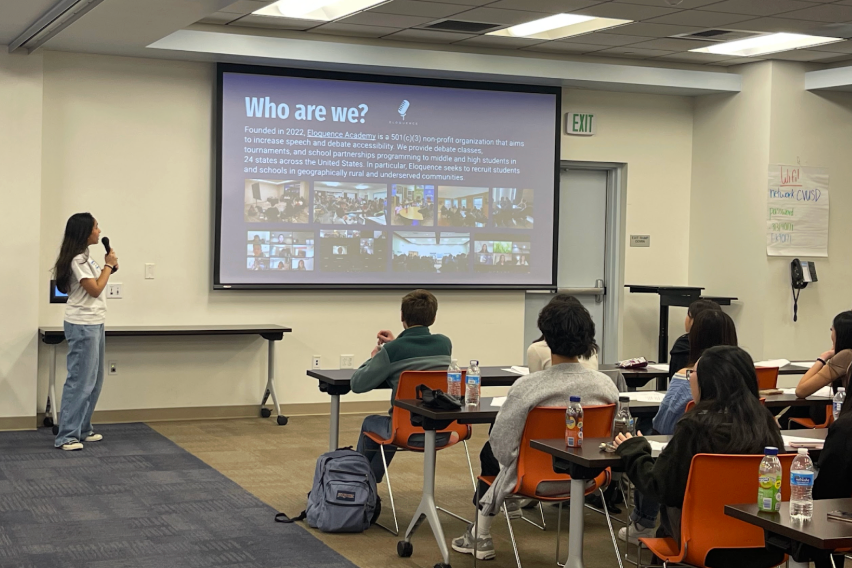
Furthermore, since research and argumentation are the underlying skills already being developed in English, history, government, civics, or political science classrooms, we have partnered with 116 schools and non-profit organizations to formalize speech and debate clubs at their respective institutions. Our partnerships with the Jay Pritzker Academy and four campuses of Kaabe Schools contributed to the first-ever debate coaching programs in rural Angola, Cambodia, and Somaliland.
One of our greatest milestones came in 2024, when I applied for and won $150,000 of in-kind and monetary grant support from Google, Microsoft, and the Hershey Company. Their funding enabled me to expand our curriculum across borders. Since then, we have digitally published nearly 100 public speaking resources in English and—through a partnership with the Latino Education Advancement Fund—Spanish. Complete with video modules, quizzes, and interactive worksheets, that webpage has received nearly 40,000 visits and attracted over 16,000 unique student users across all 50 states and 102 countries.
Empowering the Next Generation of Young Leaders
The results have been energizing. One student confided, “Although I have been hesitant about debate in the past, this program has led me to believe it’s an extremely interesting and engaging activity.” And during post-program surveys, 84% of alumni believe that their participation at Eloquence Academy will benefit them in the future.
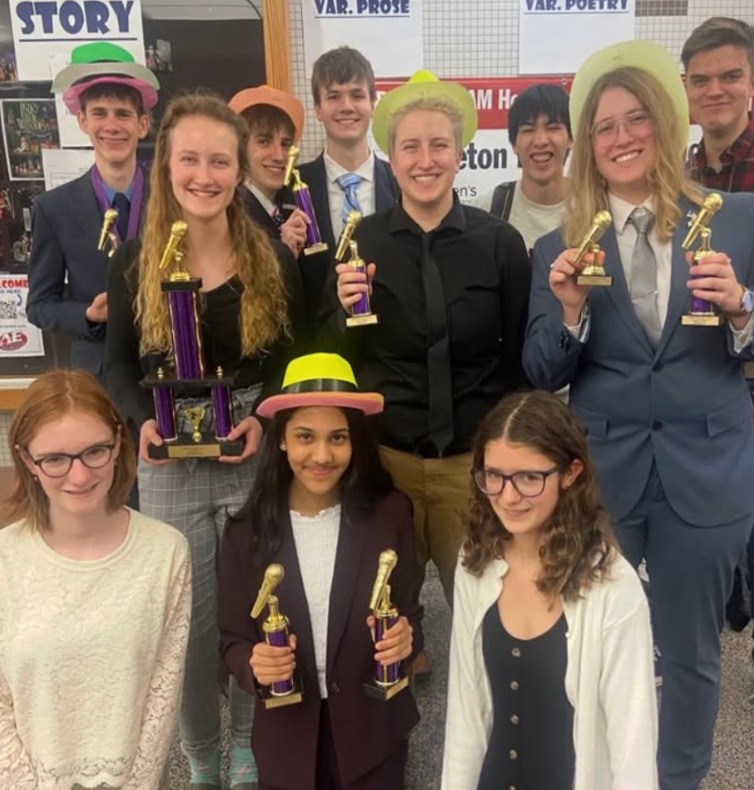
Indeed, debate’s transferable skills—including greater comfort with public speaking, improved critical thinking, and more expansive intellectual humility—have empowered our students. Not only are they better prepared for college and meaningful careers, but they are eager to speak up in their communities and take action for the causes they believe in.
For example, Nguyen Quangh Vinh used his newfound social advocacy skills to lead a school-wide assembly on environmental justice, while Sowmiya Deventhira-Raja launched a menstrual health donation drive for low-income women of colour after debating about a similar topic. Collectively, these service projects have donated 30,000 items to 15,000 individuals in need.
Whether laughing on a late-night Zoom call or seeing students’ pride after a first successful debate round, I am constantly reminded why this work matters. My greatest satisfaction is helping more students find their voice. Young people can—and should—use their voices, creativity, and fresh ideas to change the world.
You can learn more about Eloquence Academy by visiting eloquenceacademy.org or following along on social media. We are currently enrolling new students and schools, reviewing volunteer applications, and accepting tax-deductible donations to fuel our mission-driven work.

Spencer Chaisanguanthum is a rising senior at the Dalton School in New York. Spencer is the founder of Eloquence Academy, a two-time member of the Student Leadership Council at the National Speech and Debate Association, and the co-captain of Dalton’s Public Forum Debate team.