By Kelsey McCallum
At a time when teachers are under tremendous pressure to deliver test scores but are concerned about the lack of time for quality teaching, a new book presents a refreshing vision for how schools can produce both. The Well-Educated Child, written by Dr. Deborah Kenny, argues that schools must prioritize instruction that focuses on deeper learning.
Kenny is a former classroom teacher and the founder of Harlem Village Academies (HVA), the only charter schools in New York State that offer both Montessori and the International Baccalaureate. She is also founder of the Deeper Learning Institute.
The book draws on her 25+ years of experience with students from preschool to high school, taking readers into classrooms where children are taught to become deep thinkers, avid readers, intellectually curious, and self-motivated. Throughout its pages, Kenny shares clear principles for curriculum, assessment, school culture, and teacher practice.
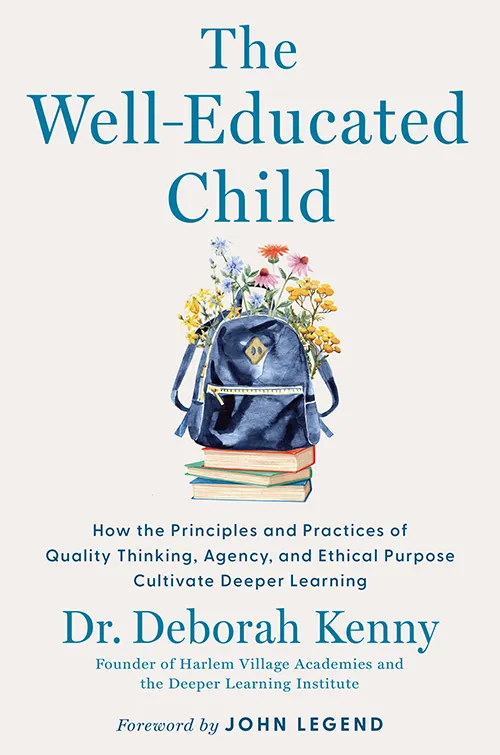
TEACH recently connected with Deborah Kenny to learn more about her book, her vision of what education should be, and what it would take for schools across the country to reach this goal.
The following interview has been edited for length and clarity.
Q: The book draws from your experience running a PreK–12 charter network in Harlem. Could you tell us more about that role? How did it influence the way you think about education?
I have three children. And, interestingly, when I started as principal of the first Harlem Village Academy middle school, my own children were in middle school as well. So I was watching my kids go through their suburban school while I was running an urban school of the same grade levels. And in my view, a school in the suburbs, or a magnet school, or even a private school like Sidwell Friends—where the children of presidents have attended for generations—should be the same quality as a school in Harlem. During my time with the HVA schools over the last 25 years, I was working toward that vision.
Q: What inspired you to write The Well-Educated Child?
When I wrote this book, what I had in mind was sharing my ideas about excellent education for children of all backgrounds. I wanted other educators and parents to have the chance to learn all the things I had learned the hard way—over decades!
It took years and years to meet some of the smartest, most revered educators in the country, read hundreds of books, and then implement those ideas in classrooms—all in pursuit of articulating what comprises a truly exquisite education, and then providing that exquisite education for the children in our care.
I wish I had some of that guidance when I was first starting out as an educator, and I felt a responsibility to share everything I’d learned over a lifetime in education, so the next generation of teachers won’t have as hard a time as I did. My hope is that rather than struggling uphill for the next 25 years, today’s teachers can take the wisdom and best practices I outline in the book, and build on them.
Q: What do you believe are the main factors contributing to a decline in national scores for students across America?
With regard to reading, we shouldn’t be using curricula that is designed specifically to teach kids how to take tests with short passages, rather than spend the majority of the school year reading a significant number of high-quality books. For example, middle school students should be reading for at least an hour a day, which comes out to about one book per week or fifty books per year.
Some test prep is understandable, but the deep and rich study of both classics and diverse books needs to comprise the majority of the curriculum. The foundation of all of the knowledge, fluency, vocabulary, and comprehension that students will acquire from reading a broad spectrum of books (and a significant amount of them!)—that needs to be core to a school’s curriculum.

With regard to math, rather than teaching students a procedure and having them simply memorize and repeat it, we need to focus on problem-based math. Students should be grappling with complex problems for a long period of time, understanding the underlying concept, and then applying that concept to new and complex problems.
I also think it’s important to note that the tests themselves, in many cases, are subpar. Instead of asking, “What’s causing a decline in test scores,” the question I think we should be asking instead is: “Is this the right test?”
I haven’t been happy with the way tests constrain and determine the parameters of what’s taught in a school, so for our schools I decided to create our own objectives and internal assessments. I also sought out other assessments that aligned with our vision. That’s how we eventually came upon the International Baccalaureate, because that’s a completely different kind of test. It requires students to, for example, research a topic over the period of an entire year. Or it requires students to do a lot of extended writing, and to revise their writing over and over. These are the kind of tests I would like to see in every school.
The last thing I would add is that the advent of social media has significantly shortened attention spans, and I think we need to be doing everything we can to prioritize schools and classrooms without cellphones. (I highly recommend reading The Anxious Generation by Jonathan Haidt, which goes into great detail about the impact of phones on students.)
Q: One of the focuses of your book is on “deeper learning.” How do you define that?
I define deeper learning as consisting of three domains: quality thinking, agency, and ethical purpose. These are supported by the foundational ideas of free inquiry, humility, passion for knowledge, and appreciation for beauty.
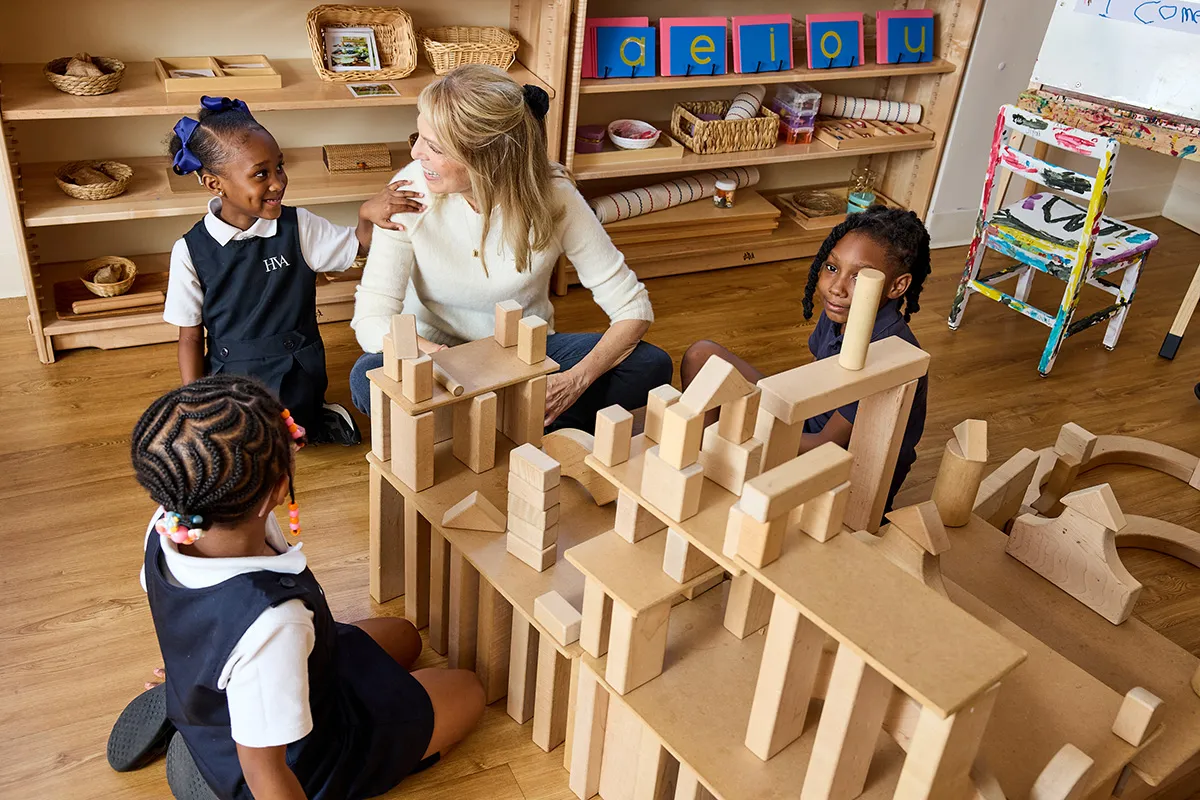
The promise of deeper learning is the promise of students who are capable of ingenious, agile thinking—the kind of thinking that can prepare the next generation of scientists to summon insights that could prevent pandemics, or entrepreneurs to come up with innovative ideas, or environmental scientists to avert climate disaster.
Q: In your opinion, what does it mean for children to be well educated? How can schools achieve this?
First, we need our children to be quality thinkers. This means that they are knowledgeable, sophisticated, independent thinkers. And that sounds obvious. But the reality is that so many of the activities that happen—both in the school day and in their own lives on a day-to-day basis—not only don’t contribute to quality thinking, but actually detract from it.
The second component of being well educated, in my view, is a sense of agency. And what I mean by this is that a young person is self-directed, intrinsically motivated, driven, and persistent. These are qualities that will help students persevere through whatever challenges they may face in their lives.
And the third component of being well educated is having a sense of purpose. Seeing life not as “What can I get?” but rather as “What am I here to contribute? What is my destiny? What is my personal life mission? What am I here to give to the world?”
About Dr. Deborah Kenny
Dr. Deborah Kenny is founder of Harlem Village Academies and the Deeper Learning Institute, and is one of the most influential educators in the country. She has been honoured with the Columbia University Teachers College Distinguished Alumni Award, and named on Oprah’s Power List and Esquire’s Best and Brightest, and is regularly featured in national media. The mother of three grown children, Deborah lives in New York City. She can be followed on X, Instagram, Facebook, and LinkedIn.
Feature image by Danny Bristoll

Kelsey McCallum is an Associate Editor for TEACH Mag. She holds a BSc from the University of Guelph and a Graduate Certificate from Centennial College. She currently lives in Toronto, ON, with her partner and their cat, Banksy.