

Subscribe from $5.99
0,00 USD

No products in the cart.

Daisy’s Near CATastrophe: Real-life Tale of a Fearless Feline

Advertisement

The tale of Daisy will inspire pet lovers of all ages. She’s a clever kitten fiercely loyal to her dog sibling, Bear. Daisy also has a very special talent: she can open doors! But when Daisy uses her unique ability to escape and look for Bear, she finds trouble instead.

Daisy’s Near CATastrophe by Debra Westgate-Silva is a children’s book based on true events. It traces the true story of a fearless feline who goes missing and the K9 pet tracker who comes to her rescue.
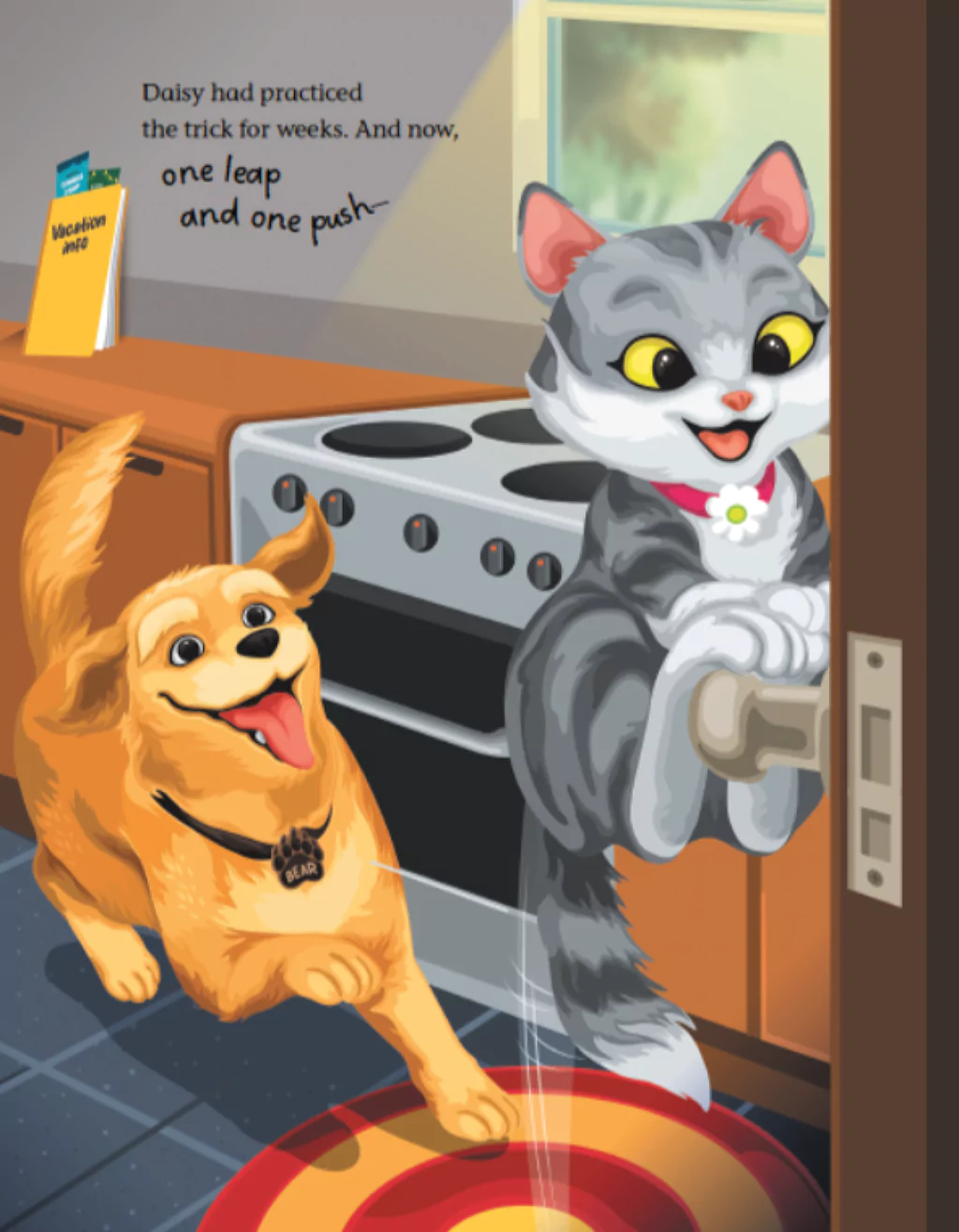
One of the pages from "Daisy's Near CATastrophe". This page shows Daisy the cat turning the handle on the kitchen door. The accompanying text on the page reads: "Daisy had practiced the trick for weeks. And now, one leap and one push-"
Photo credit: Debra Westgate-Silva

Vacation Gone Wrong

It all starts when Daisy’s family goes on vacation, and Daisy is sent to a cat kennel. But this feisty feline doesn’t want to stay there—not without her best friend, Bear! While the story follows Daisy’s adventures and mishaps, the illustrations reveal another part of the story that Daisy is unaware of—a pet-detective dog is searching for her.

Just when things are at their darkest, Daisy remembers who she is: a kitten who can open doors and doesn’t give up. Daisy’s unique talent may have caused her trouble, but it could also be the key to reuniting her with Bear and their family.
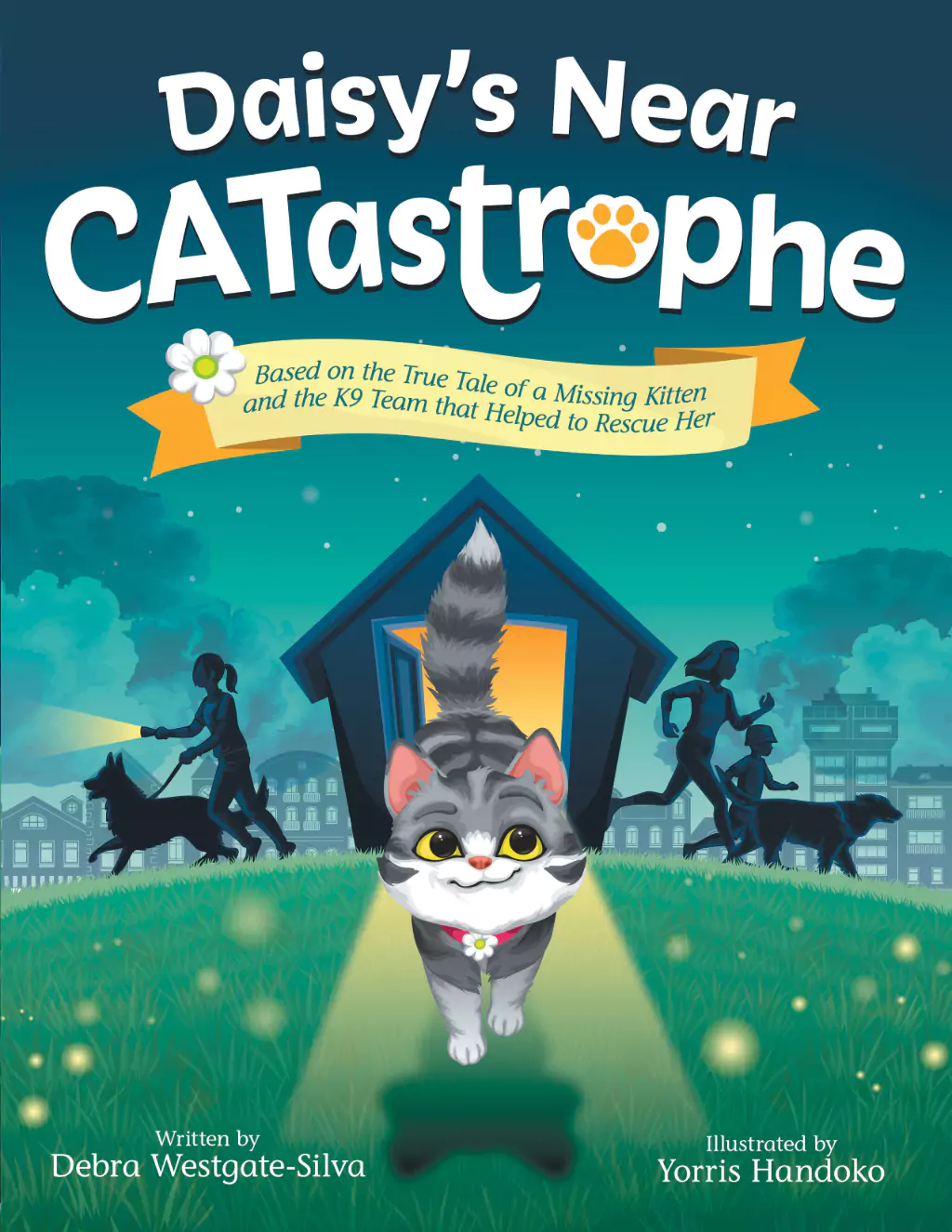
The book cover of "Daisy's Near CATastrophe," which shows Daisy walking away form her house, and a group of people and animals searching for her. The subtitle of the book reads: "Based on the True Tale of a Missing Kitten and the K9 Team that Helped to Rescue Her."
Photo credit: Debra Westgate-Silva

Teaching Moments

Written for children ages 4–9, Daisy’s Near CATastrophe gives readers of all ages an inside look at the real-life search and rescue efforts conducted by K9 pet trackers. And the book’s beautiful illustrations contain clues for kids to spot along the way.

“The story offers many teachable opportunities,” says Westgate-Silva. “The curriculum includes social emotional activities about friendship and assertiveness as well as literacy skill-based lessons on making connections between illustrations and text, distinguishing fact from fiction and experimenting with point of view.”
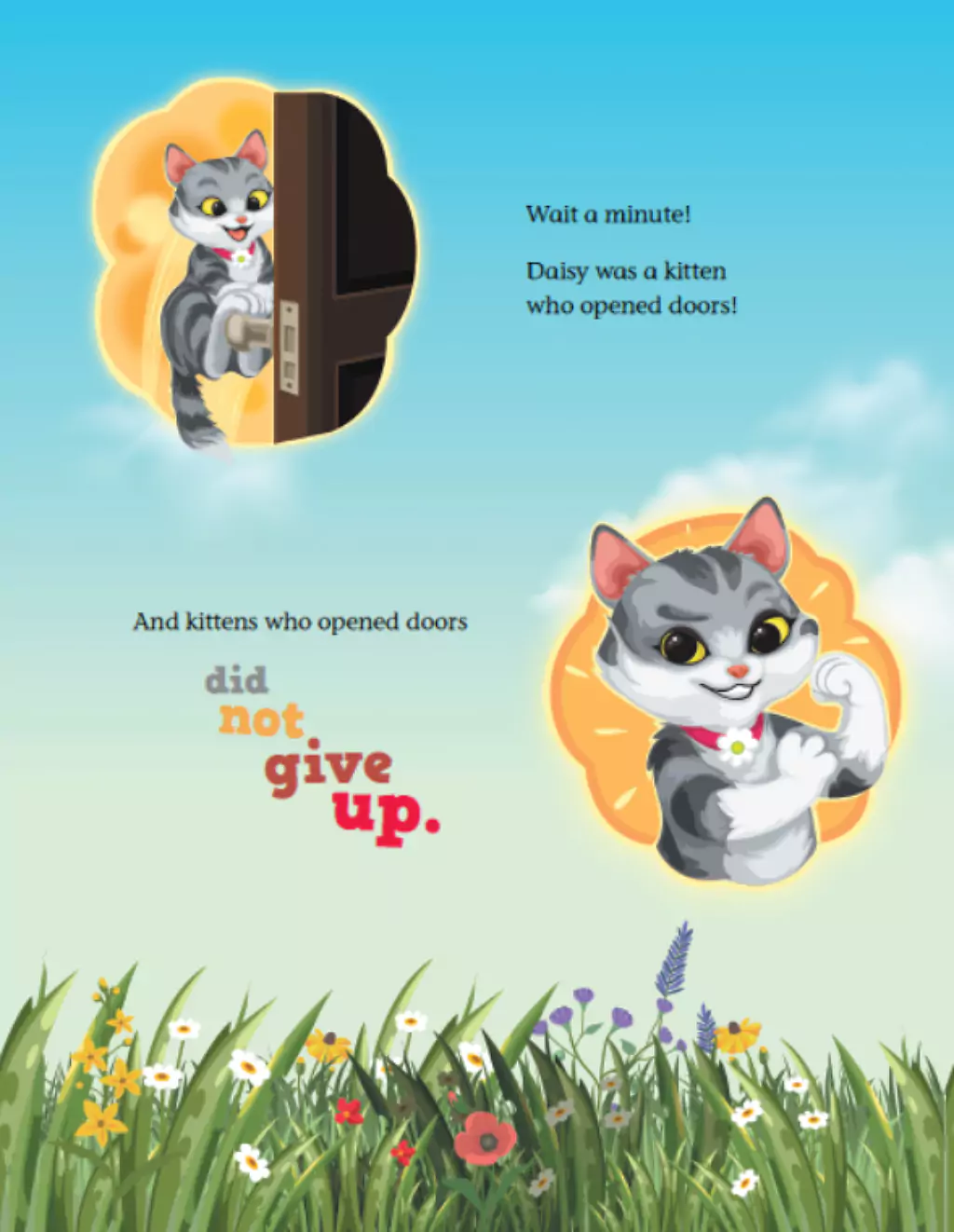
A page from "Daisy's Near CATastrophe." It shows Daisy opening the kitchen door, then another image of her looking determined. The text reads: "Wait a minute! Daisy was a kitten who opened doors! And kittens who opened doors did not give up."
Photo credit: Debra Westgate-Silva

Ultimately, Daisy’s Near CATastrophe is a heartwarming and empowering tale of perseverance, friendship and the unbreakable bonds between pets.

To help families and teachers reinforce the underlying messages of friendship and perseverance, Westgate-Silva, a former educator, created a full curriculum guide available on her website.


About the Author

Debra Westgate-Silva worked in public education for many years and now writes grants to support non-profit organizations focused on literacy, education, and trauma-impacted youth. 
TEACH is the largest national education publication in Canada. We support good teachers and teaching and believe in innovation in education.
Education News

Natural History Institute and Prescott College Partner to Offer Naturalist Certification Program

The unique Mogollon Highlands Naturalist Certification program is designed to cultivate deep connections to nature, place, and community through the practice of natural history.

The Data Is Clear: Students Want Job Outcomes and U.K. Universities Are Listening

Is going to university still worth it? That’s a question I hear more and more often these days. The answer increasingly depends on what a student wants from that degree.

The Urgent Case for Reimagining Support, Belonging, and Hope in Schools

In his new book, Dr. Ross Greene explains why so many kids are struggling, why traditional discipline makes things worse, and how schools can transform their approach to become proactive, collaborative, and helpful.

Using Music to Teach Democracy

Targeted at students aged 6–14, project MELODY is building a cross-curricular methodology that integrates music with citizenship education.

Free eBook Offers Roadmap to Human-Centered Communication in the Age of AI

The free resource offers districts a roadmap for building strong family engagement during a period of rapid automation in schools.

Behind Canada’s Declining Math Performance and the Evidence-Based Fix

For over a decade, math scores on international tests have declined across all Canadian provinces. Here’s what schools can do to reverse this downward trend.
TEACH Mag
TEACH Mag
TEACH is the largest national education publication in Canada. We support good teachers and teaching and believe in innovation in education.

Advertisement

Read More

Natural History Institute and Prescott College Partner to Offer Naturalist Certification Program

The unique Mogollon Highlands Naturalist Certification program is designed to cultivate deep connections to nature, place, and community through the practice of natural history.

When Plagiarism Meets Policy: How an Academic Dishonesty Case Taught Me an Important Lesson

During my time as a program coordinator, I learned a lesson that has stuck with me ever since: school values don’t collapse in one dramatic moment, but rather erode one decision at a time.

The Data Is Clear: Students Want Job Outcomes and U.K. Universities Are Listening

Is going to university still worth it? That’s a question I hear more and more often these days. The answer increasingly depends on what a student wants from that degree.

The Urgent Case for Reimagining Support, Belonging, and Hope in Schools

In his new book, Dr. Ross Greene explains why so many kids are struggling, why traditional discipline makes things worse, and how schools can transform their approach to become proactive, collaborative, and helpful.

Using Music to Teach Democracy

Targeted at students aged 6–14, project MELODY is building a cross-curricular methodology that integrates music with citizenship education.

An Interdependent Approach: Building and Centring Positive Disability Identities in the Classroom

As educators, we aim to create meaningful, exciting, and supportive futures for all of our students. That’s why we must build learning environments where positive disability identities grow.