

Subscribe from $5.99
0,00 USD

No products in the cart.

Rethinking Continuity: How Looping Can Transform Classrooms

Advertisement

By Dr. Yuvraj Verma, Caroline Hudgins, Adriane Gill, and Rachel Campbell

The term “looping” refers to teachers staying with the same group of students for two or more consecutive years. Research confirms that students perform better when they experience a stable environment with consistent relationships (Nichols and Nichols, 2002; Pianta et al., 2008). One of the ways to achieve this is through looping.

This strategy also improves academic outcomes, because teachers are familiar with students’ learning styles and areas of need. Plus, there’s always something comforting about seeing a familiar face.

We have been experiencing a plethora of advantages from looping up with many of our past sixth- or seventh-grade students from last school year to this year. And we would like to share them here.
Subscribe to Keep Reading

🔑 You’re one step away from unlocking premium content.
Subscribe now for as low as $5.99 and get full access!

Subscribe

If you’re already subscribed, please Log In.

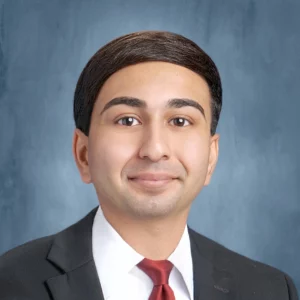
Dr. Yuvraj Verma is a TEAMS math teacher at Bessemer City Middle School in Alabama and an Adjunct Professor of Graduate Education at William Howard Taft University in Colorado. He holds a BA in Sociology from Iona University, an MAT in Elementary and Special Education from the Relay Graduate School of Education, and an MBA in Healthcare Administration, EdS in Education Administration, and EdD in Technology and Leadership from William Howard Taft University.
Caroline Hudgins is an English Teacher at Bessemer City Middle School. She holds a BSE in Secondary English Language Arts from the University of Alabama.
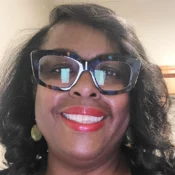
Adriane Gill is a TEAMS Math Teacher at Bessemer City Middle School in Alabama. She holds a BS in Computer Science from Grambling State University, an MBA from Samford University, and a Certification in Secondary Mathematics Education from the University of Alabama at Birmingham.

Rachel Campbell is an English Teacher at Bessemer City Middle School in Alabama. She holds a BA in English from the University of Alabama at Birmingham and an AA degree in Pharmacy from Jefferson State Community College. Rachel is pursuing a MSEd in Secondary English Language Arts Education at Jacksonville State University.

Education News

New Podcast on Retirement, Aging, and Longevity

Are you interested in learning more about retirement? The “Retirement in America” podcast explores the challenges, ideas, and solutions shaping retirement security in the United States.

Jeopardy! Winner Credits High School for Game Show Success 

Perkins, a 2005 graduate of Rosati-Kain Academy, recently competed and won her debut game on the Emmy-winning game show on May 1.

From Commitment to Classrooms: Advancing Refugee Education

UNHCR–TECNO global partnership supports high impact education initiatives for refugee children and youth in East Africa.

Kids Write 4 Kids Creative Writing Contest Celebrates Young Authors Across Canada

Two Grade 6 writers earn publication; expert judges praise the creativity, craft, and heart of a record number of student storytellers.

ReadBright Literacy Tools Earn Bronze Efficacy Certification from EduEvidence

This independent certification recognizes that ReadBright aligns with the Science of Reading and meets rigorous standards for evidence-based instructional design.

Teaching Children to Be Better, More Critical Internet Users

McGill researchers designed and then tested a program that was shown to improve elementary students’ digital literacy skills.

Advertisement

Advertisement

Read More

New Podcast on Retirement, Aging, and Longevity

Are you interested in learning more about retirement? The “Retirement in America” podcast explores the challenges, ideas, and solutions shaping retirement security in the United States.

Jeopardy! Winner Credits High School for Game Show Success 

Perkins, a 2005 graduate of Rosati-Kain Academy, recently competed and won her debut game on the Emmy-winning game show on May 1.

Three Myths About K–5 Online Education (And Why They Don’t Hold Up)

As the Dean of Elementary at a K–12 online private school, I constantly hear several myths about online education that I want to debunk.

Fixing Assessments So AI Can’t Fake the Messy Middle

When we grade the route, not just the destination, the focus returns to the middle of learning, where it belongs.

Why Non-Traditional Formats Count as Real Reading

When we start drawing hard lines around what “real” reading looks like, we lose sight of what actually helps kids become readers in the first place.

From Commitment to Classrooms: Advancing Refugee Education

UNHCR–TECNO global partnership supports high impact education initiatives for refugee children and youth in East Africa.