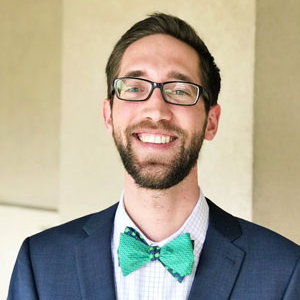
By Matthew Panozzo and Paul William Eaton
Before we became researchers and educators, we were readers. In 2023, when book challenges and bans increased across the nation, we knew we wanted to counter the narrative that books are dangerous. We sought to collect research and essays on how books fostered understanding, built community, and healed emotional and physical trauma. Thus, Battle of the Bans: Narratives of Reading and Engaging with Banned Books was born!
Our collection is broken up into three sections: Context, Introspection, and Action. Through the Context section, contributors share their experiences navigating book challenges and bans. This sets the stage for readers to understand both the process and consequences of challenging books. The Introspection section features personal narratives reflecting on specific banned or challenged texts and how these books influenced the contributor. And last is the Action section, which provides readers with steps they can take to counter book bans and challenges. These concluding chapters promote access, community engagement, and reader empowerment.
Before he became an educator of pre-service teachers, Matthew was a middle school English teacher for six years. He now tells his undergraduate and graduate students that this was a dynamic group to craft a classroom library for, as students were maturing at different rates. Some were holding on to innocence, while others were curious about complexities of the human experience. This tension between innocence and maturity found its way into the books that were made available and that students chose to read.
For Matthew, his goal was to empower students to identify their own reading parameters. He focused on creating a classroom community where students, families, teachers, librarians, and administrators could talk about books. What was appropriate for one student might not be appropriate for another, yet ultimately the reader should be able to make that decision for themselves.
Recommendations for Teachers, Librarians, and School Administrators
Creating a classroom/school culture to talk about books is not quick or light work. Each text should be curated based on the contexts. Back when he was a novice teacher, the best advice Matthew was given was to prepare a defense for each text he used in his curriculum or made available in his classroom library. This can include:
- Reading the books through a variety of lenses, even the ones that seem to have cemented themselves within our classrooms and curriculums.
- Kelly P. Vaughan and Jackson J. Vaughan-Lee talk about this in their chapter, “The Need for Curriculum Curation: Our Experience Reading ‘The Scarlet Ibis’ and Of Mice and Men During an Era of Book Banning.”
- Consulting professional and community reviews. There are even resources available to defend books that have been challenged or banned nationally.
- Forming formal and informal committees about appropriateness of books for your context. (Additionally, talk with parents about the books.)
- Kimberly A. Nava Eggett discusses this in her chapter, “Stolen Mirrors, Tinted Windows, and Broken Sliding Glass Doors: When Book Bans Limit How We See Ourselves and Others.”
- Supporting metacognition and critical reflections of reading.
- Our Introspection section speaks to the importance of developing students’ identities as readers. Each essay looks at books that have shaped readers during different life milestones—whether it was Rose Brock metaphorically growing up alongside Junie B. Jones or Carolyn O’Laughlin finding herself through books in college.
Stories are fascinating and scary. For example, in Lois Lowry’s The Giver, society relinquished its access to knowledge and memories, entrusting the stories of humanity to one individual. That places a lot of responsibility on just one person. What a heavy burden.
In an era of book bans and challenges, The Giver feels like a call to action. We must not merely store the memories of humanity. We must build libraries of books and document the impact those stories have on readers and people. We must give all people access to stories.
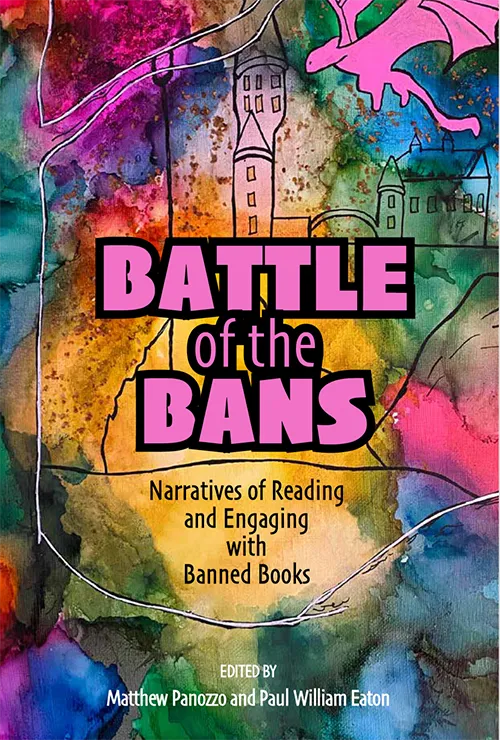
Editing Battle of the Bans felt like being entrusted with these contributors’ experiences, vulnerabilities, and triumphs. What started as a simple counternarrative to the dangers of books morphed into a rallying cry to ensure we protect books and create spaces for readers to come together and be, as Christine Jenkins and Michael Cart call it, the “community of the page.”
Whether we view books as mirrors to our own experiences, windows into others, or doorways transporting us to new worlds, there is wisdom, healing, and connection in them.

Matthew Panozzo is an Assistant Professor of Literacy in the Department of Instruction and Curriculum Leadership at the University of Memphis. His teaching and research area includes exploring identity, empathy, and humanity through literacy, arts-based education research, and children’s and young adult literature.

Paul William Eaton is Associate Professor of Higher Education and Student Affairs at the University of Alabama. His research interests include Curriculum Theory and Studies in Higher Education, Equity in Higher Education, Critical Theory, Philosophical and Post-Humanities Inquiry in Higher Education, Postqualitative and Posthumanist Inquiry in Higher Education, James Baldwin, Digitized College Student Experiences, and Critical Digital Pedagogy.