Subscribe from $5.99

Beyond the Map: Engaging with Complex Histories to Support Critical Place-Based Learning

Advertisement

By Matthew Panozzo, Lara Condon, Keishana Barnes, Anna Falkner, and Carolyn Michael-Banks “Queen”

In 2005, the novelist David Foster Wallace gave a commencement speech at Kenyon College, Ohio. During that speech, he observed that “the most obvious, important realities are often the ones that are hardest to see and talk about.”

We live and work a few states south of Ohio, in Memphis, Tennessee, yet this statement resonates deeply with us. Our city’s narrative is filled with competing, conflicting stories of space and place, but these layered histories often fade into the blur of our everyday routines.
Subscribe to Keep Reading

🔑 You’re one step away from unlocking premium content.
Subscribe now for as low as $5.99 and get full access!

Subscribe

If you’re already subscribed, please Log In.

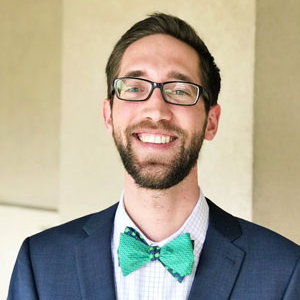
Matthew Panozzo is an Assistant Professor of Literacy in the Department of Instruction and Curriculum Leadership at the University of Memphis. His teaching and research area includes exploring identity, empathy, and humanity through literacy, arts-based education research, and children’s and young adult literature.
Lara Condon is an Assistant Professor of Mathematics Education in the Department of Instruction and Curriculum Leadership at the University of Memphis. Her teaching and research focus on enacting responsive mathematics instruction that leverages students’ funds of knowledge to help them to develop positive mathematics identities.
Keishana Barnes is an Assistant Professor of Special Education in the Department of Instruction and Curriculum Leadership at the University of Memphis. Her research interests include giftedness, African American mothers’ advocacy, creativity in teaching, critical disability studies, and how early childhood, racial identity, and family dynamics contribute to a critical consciousness in young children.
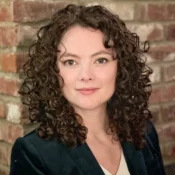
Anna Falkner is an Assistant Professor of Early Childhood Education at the University of Memphis. Her research examines how young children learn about critical social issues such as race and racism and intersects with critical civics education and history education.
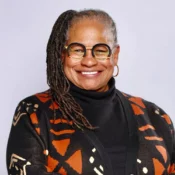
Carolyn Michael-Banks “Queen” is the founder and owner of A Tour of Possibilities (ATOP), an African American historical sightseeing tour of Memphis, TN. She is a native New Yorker who has researched, written scripts, and trained guides in Washington, DC, Savannah, GA, Philadelphia, PA, and Memphis, TN.
Education News

Google’s AI Search Poses Unacceptable Risk to Kids

The AI Overview and AI Mode built into Google Search are not safe enough to be kids’ default source of answers and, concerningly, the features can't be turned off.

29 Pieces Launches Global “Planet Earth LOVE Project” Arts Movement and Competition

Uniting schools, non-profits, and global artists to explore environmental stewardship through 2,500 artworks in a shared Instagram gallery of love for our planet and each other.

Leadership Program Helps Community College Students Earn Degrees from Top Colleges and Universities

The Kaplan Educational Foundation celebrates the latest college decisions from its 19th cohort of scholars in its Kaplan Leadership Program.

Can We Predict Third-Grade Proficiency in Kindergarten?

New study examines early indicators that can help educators better support students before achievement disparities become harder to address.

Dancing Through Culture: Using Children’s Literature to Preserve Dominican and Caribbean Identity

Luz Maria Mack’s growing collection of children’s books highlights the power of storytelling to preserve cultural traditions, strengthen identity, and create meaningful opportunities for social-emotional learning.

New School Safety Trends Report Shows How Schools Are Improving Outcomes in Emergencies

CENTEGIX’s 2026 School Safety Trends Report reveals how technology is reducing uncertainty and providing clarity when seconds matter.

Advertisement

Advertisement

Read More

What Happens When the Last Pre-AI Teachers Leave the Classroom?

The conversation about AI in education focuses almost entirely on students. What they’re losing. What the system should do to protect them. But it’s not just students who are losing something. It’s teachers, too.

What Is Student Agency and Why Is It Important?

Student agency is often discussed but rarely defined in ways that feel practical. In my classroom, it means giving students voice, choice, and meaningful responsibility within clear expectations.

What Administrators Should Look for in Quality Playground Development for Schools

A well-planned playground enhances student development, improves your school’s appeal to prospective families, and supports educational objectives.

How Does ABA Therapy Compare with Other Autism Therapies for Supporting Students with Autism?

When supporting students with autism, there are many different types of autism therapies that can help children thrive in the classroom and beyond. Applied Behaviour Analysis (ABA) is one of the most well-known options.

Beyond “Just Say No”: How Teachers Can Have Honest Conversations About Alcohol with Teens

For decades, alcohol prevention efforts have often centred on a simple message: “Just say no.” While well-intentioned, today’s educators know that one-size-fits-all approaches rarely resonate with teenagers.

Google’s AI Search Poses Unacceptable Risk to Kids

The AI Overview and AI Mode built into Google Search are not safe enough to be kids’ default source of answers and, concerningly, the features can't be turned off.